Where the Flowers Keep Their Counsel
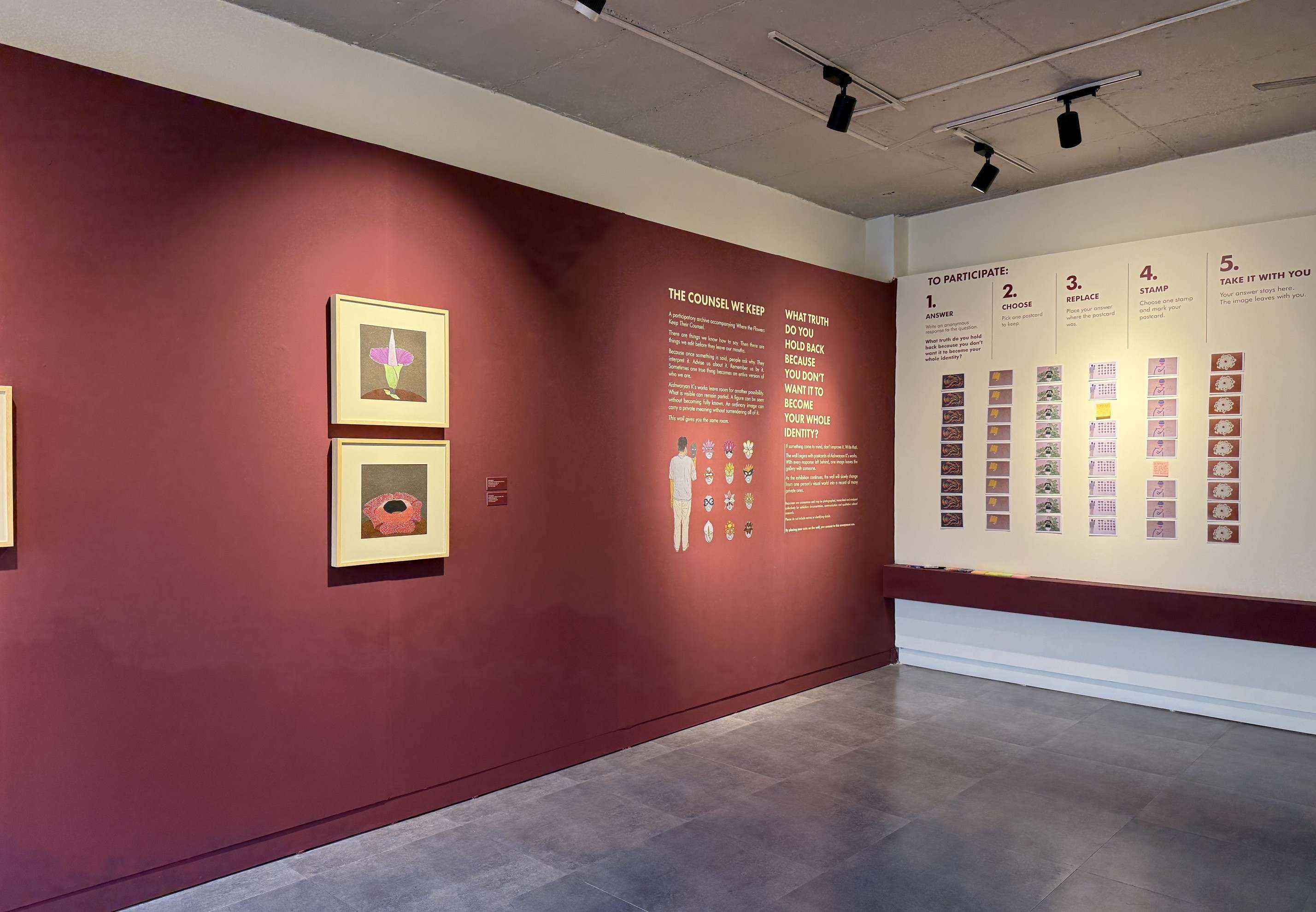
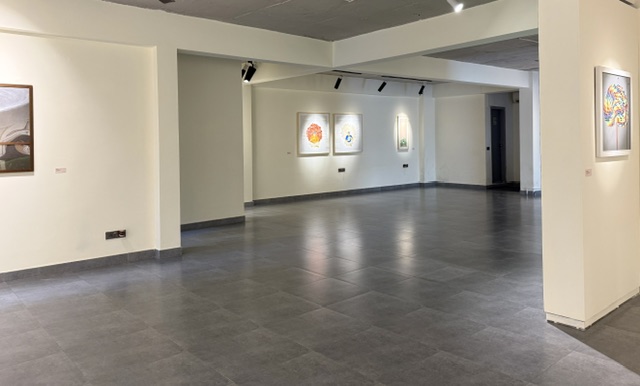
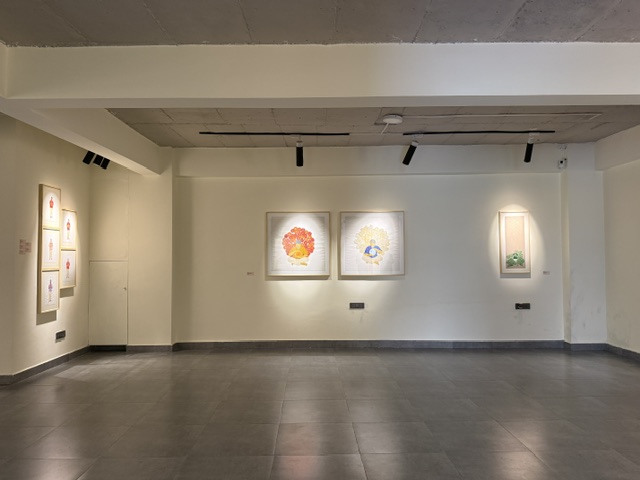
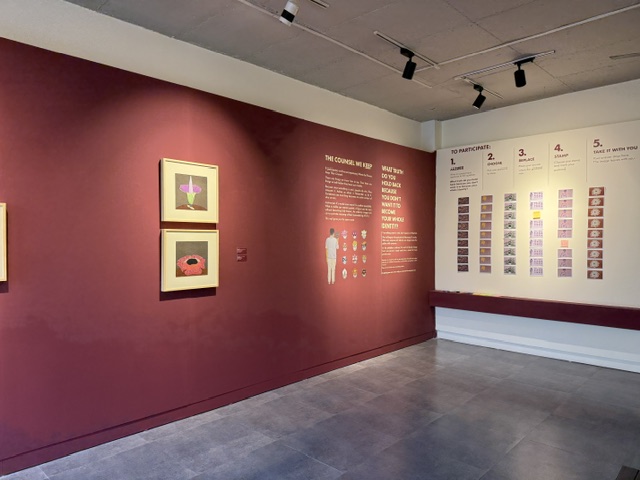
At the centre of one of Aishwaryan K.’s drawings, a vast red flower opens around an area of impenetrable black. Its fleshy, speckled petals form an elaborate perimeter around a centre that refuses description. Another flower rises vertically, pleated in purple and green around a pale protruding form. Both images are botanically credible, yet neither remains within botanical illustration. One may see a rare bloom, an aperture, an organ, a body or a private joke. The flower permits these resemblances without confirming them.
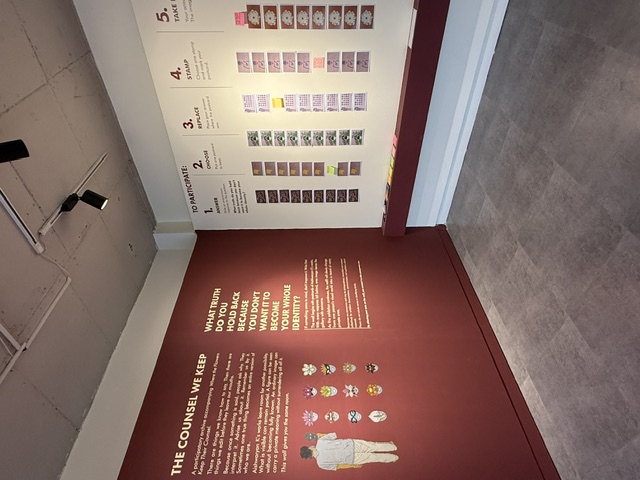
Where the Flowers Keep Their Counsel begins from this capacity. To keep one’s counsel is not simply to possess a secret. It is to decide what can be said, under what conditions, and to whom. Counsel also implies thought shared in confidence: knowledge may circulate without becoming public declaration. Aishwaryan’s flowers operate within this delicate economy. They are vividly present rather than hidden, but their significance is not equally available. They disclose through colour, morphology, scale and association while withholding the assurance of a final interpretation.
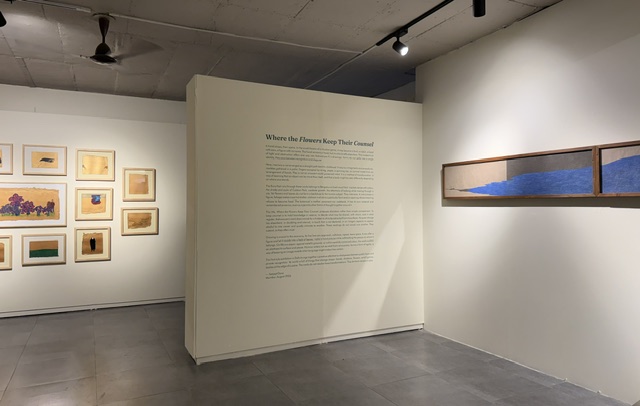
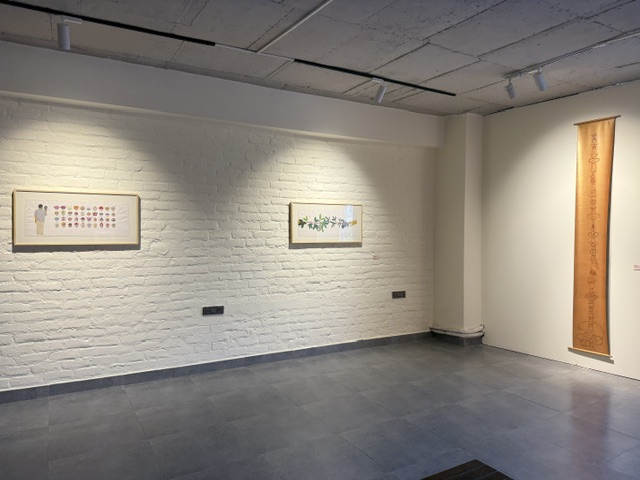
This structure extends beyond the explicitly botanical works. Vines cross a seated black silhouette, forming a screen between figure and viewer. In a long drawing, saturated leaves multiply until the human figures among them become intermittently visible. Butterflies cross fibrous paper, their white contours almost disappearing into the ground. Elsewhere, a monumental tree occupies a wide field. Its trunk divides and rejoins, its roots spread across a dark band of earth, and its canopy establishes a shelter whose inhabitants remain unseen. Nature in these drawings regulates visibility.
The sources of this vegetation are lived. Cubbon Park, Bengaluru’s flower and vegetable markets, garden paths and encounters with particular plants offer a repertoire of forms, colours and sensations. Yet Aishwaryan does not map the city or document its ecology. The park and market return as structures of memory: foliage that crowds the eye, organic matter arranged for attention, the tactility of plants, the movement between public exposure and momentary privacy. Bengaluru is carried into the drawings through selection. A plant is enlarged, a leaf recoloured, a flower isolated.
The exhibition is therefore not about ecology in any primary sense. Its botanical world is inseparable from the artist’s experience of learning how identity can be expressed indirectly. As Aishwaryan came to recognise and accept his sexuality, childhood memories acquired new relationships to the present. This does not make every flower a sexual symbol, nor does it cast childhood as a closet whose signs can now be decoded. The adult artist returns to remembered forms because they already contain methods of alteration, disguise and imaginative freedom. What changes is the position from which they are remembered.
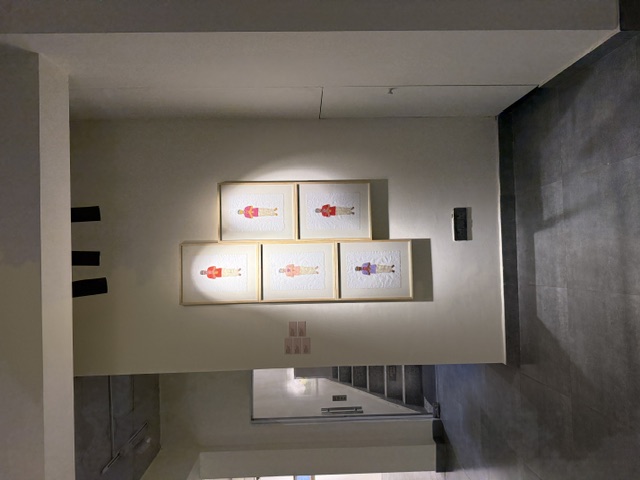
Childhood games provide the clearest model. In the serial drawings, hands stretch thread, balance objects, release marbles, spin tops, fold paper and produce fleeting signs. A hand can make an animal through shadow without ceasing to be a hand. Paper becomes a toy through folds; a marble becomes a miniature world. Play trains perception to recognise one thing in another. It allows transformation without destroying the first identity. In Aishwaryan’s practice, this is both childhood pleasure and mature pictorial intelligence.
The drawings retain the economy of those games. Fine contours are placed on fibrous brown surfaces; sharply coloured details interrupt otherwise quiet fields. Objects and gestures are isolated from explanatory settings. Repetition occurs through panels, pairs and mirrored positions, but repetition does not produce certainty. Two bearded male figures occupy opposite ends of a long gold ground, each absorbed in a mobile phone. Are they connected, separated, doubled or simply concurrent? The vast interval does not answer. It turns distance itself into the subject of attention.
Queerness enters through these arrangements rather than through a stable set of emblems. Sara Ahmed’s writing on orientation considers how bodies take shape through the objects, directions and relationships towards which they turn. Aishwaryan’s hands similarly orient themselves towards marbles, feathers, other hands and objects poised between use and signification. Figures turn towards screens or become partially oriented through plants. Desire is registered as direction, proximity and potential contact. It need not culminate in an explicit scene to alter the space of the image.
This produces what might be called differential recognition. A flower may remain a flower for one viewer while another registers its bodily resemblance. A hand game may appear humorous while also recalling how gesture creates affiliations understood only by particular observers. Eve Kosofsky Sedgwick showed that the closet is not a simple division between secrecy and disclosure. It is a shifting distribution of knowledge in which different people know, suspect or fail to recognise different things. Aishwaryan’s images inhabit this uneven field without turning it into a puzzle with a correct answer.
Opacity is crucial here. Édouard Glissant’s right to opacity distinguishes relation from the demand that another person become transparent. Aishwaryan’s work makes a comparable claim through form. The dark centre of the flower, the figure absorbed by leaves, the silhouetted body, the blank gold panel and the space between two people do not signify a failure to speak. They let an image remain open without surrendering everything it carries.
The humour and tenderness of the drawings depend upon this freedom. Their playful objects and improbable flowers do not form an innocent surface awaiting curatorial exposure. They are active collaborators in how experience becomes shareable. Flora supplies more than camouflage: it provides a morphology through which the artist can think about opening and enclosure, attraction and aversion, singularity and resemblance. Play supplies the operations through which those forms can change identity. Drawing preserves the transformation without fixing its result.
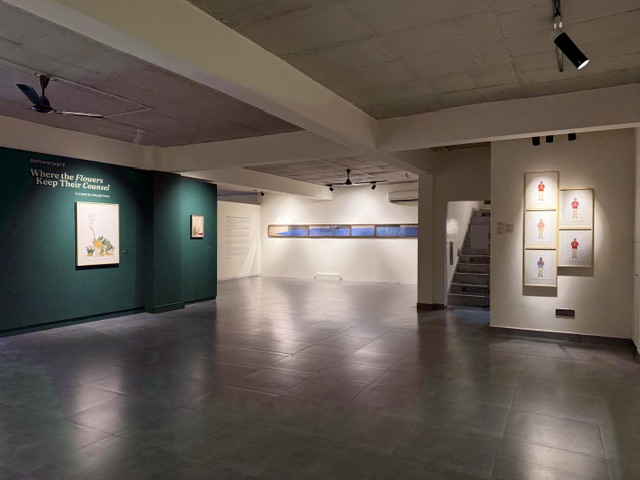
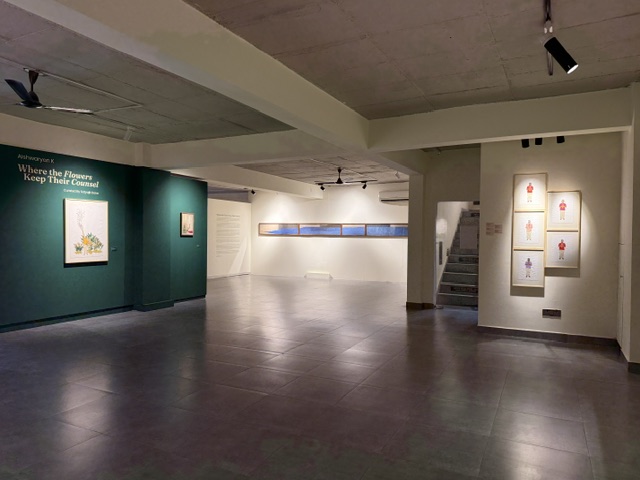
For Aishwaryan K.’s first solo exhibition in Delhi, Where the Flowers Keep Their Counsel proposes the garden as a social and psychological space rather than an ecological theme. Here, a flower can speak through resemblance while remaining silent about what it means. A hand can carry bodily memory without narrating it. A figure can enter foliage without vanishing. The works offer neither confession nor denial. They create forms of company among things that recognise one another without requiring complete disclosure. The flowers keep their counsel, but they do not keep it alone.
-Satyajit Dave
July 2026, Mumbai
Show less