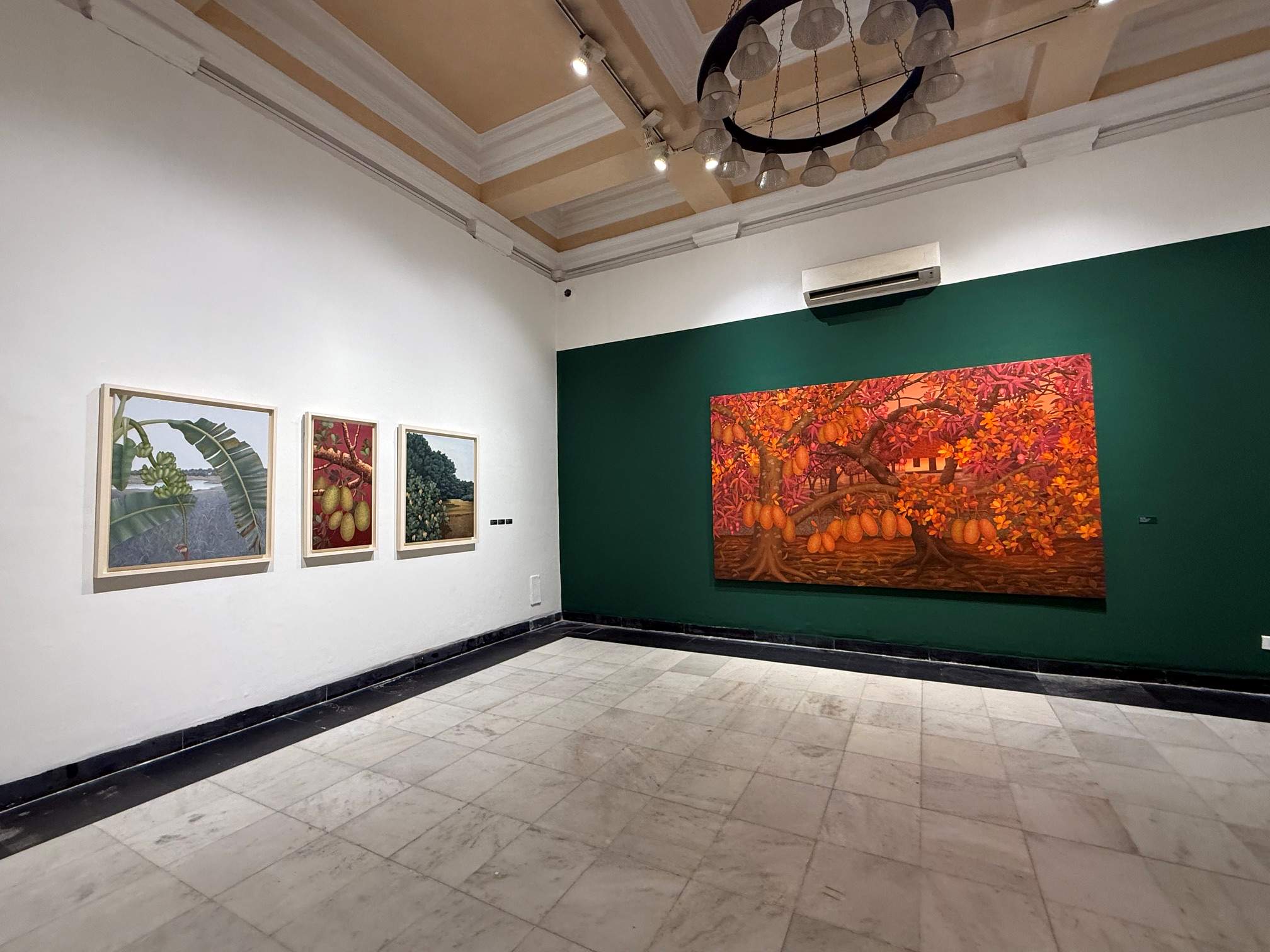
Kani: Garden as First Sight
Before the world is named, it is seen.
In Kerala, kani is the first auspicious sight placed before the eyes at the beginning of Vishu. Before dawn, fruit, grain, flower, lamp, mirror, vessel, metal and sacred text are gathered into an image of fullness. One is led to...
Show More
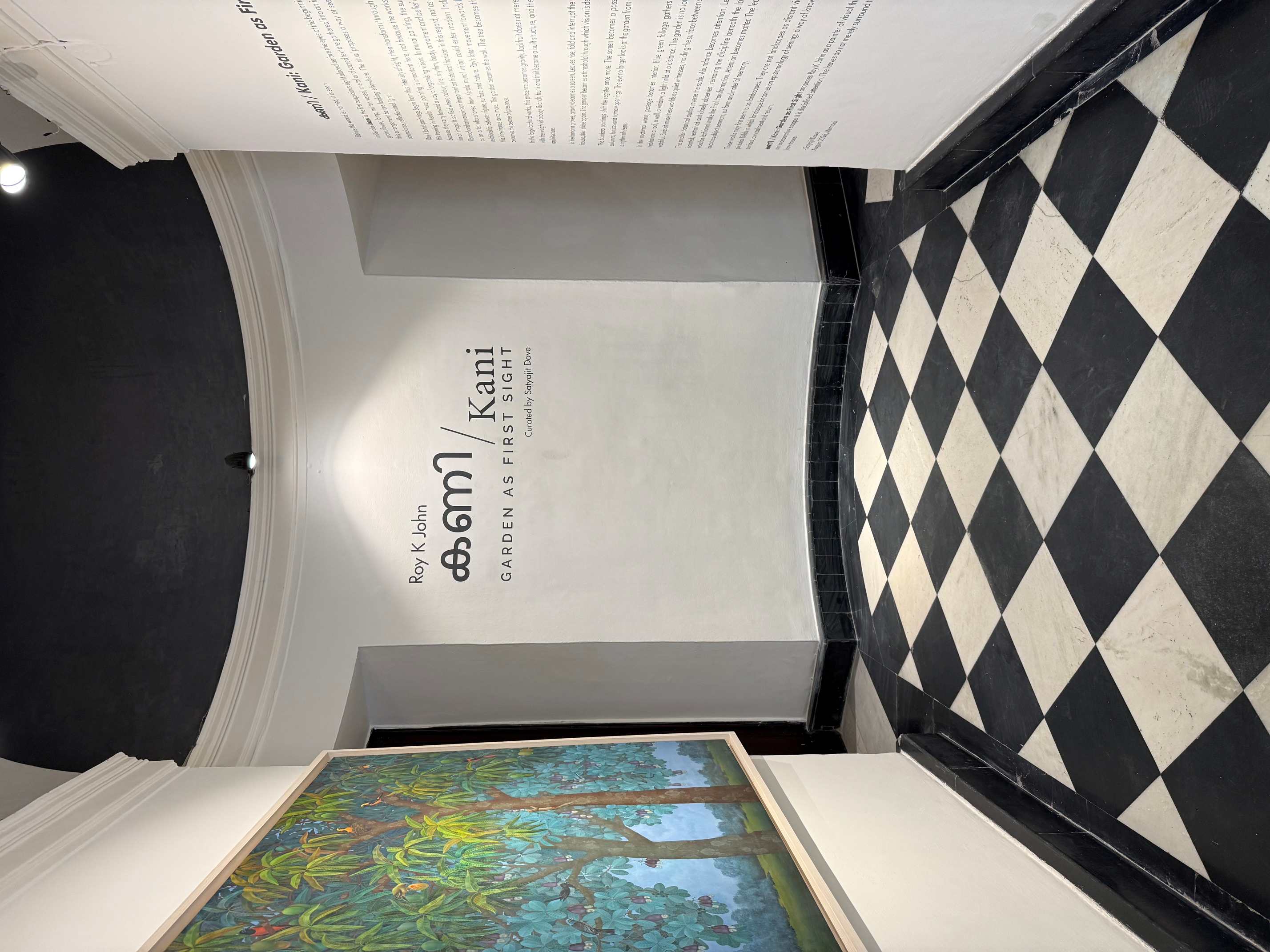
Kani: Garden as First Sight
Before the world is named, it is seen.
In Kerala, kani is the first auspicious sight placed before the eyes at the beginning of Vishu. Before dawn, fruit, grain, flower, lamp, mirror, vessel, metal and sacred text are gathered into an image of fullness. One is led to this arrangement before looking elsewhere. The ritual proposes a way of seeing: the world first arrives as abundance, reflection and light.
Roy K John’s paintings begin from this intensity of sight, then transform it through different registers of looking. His training in Kerala mural painting is important here, not because the works imitate mural tradition, but because they carry forward a way of organising vision. In mural painting, the surface is not merely a support for an image. It is a field where colour, line, rhythm, body, ornament and belief are brought into relation. A. Ramachandran remains an important art historical horizon in this regard, not as a model to be repeated, but as an artist who showed how Kerala mural vision could enter modern Indian painting and alter the relationship between figure, surface and nature. Roy’s later movement towards landscape as a genre shifts this inheritance once more. The garden becomes the wall. The tree becomes the figure. The fruiting plant becomes the bearer of presence.
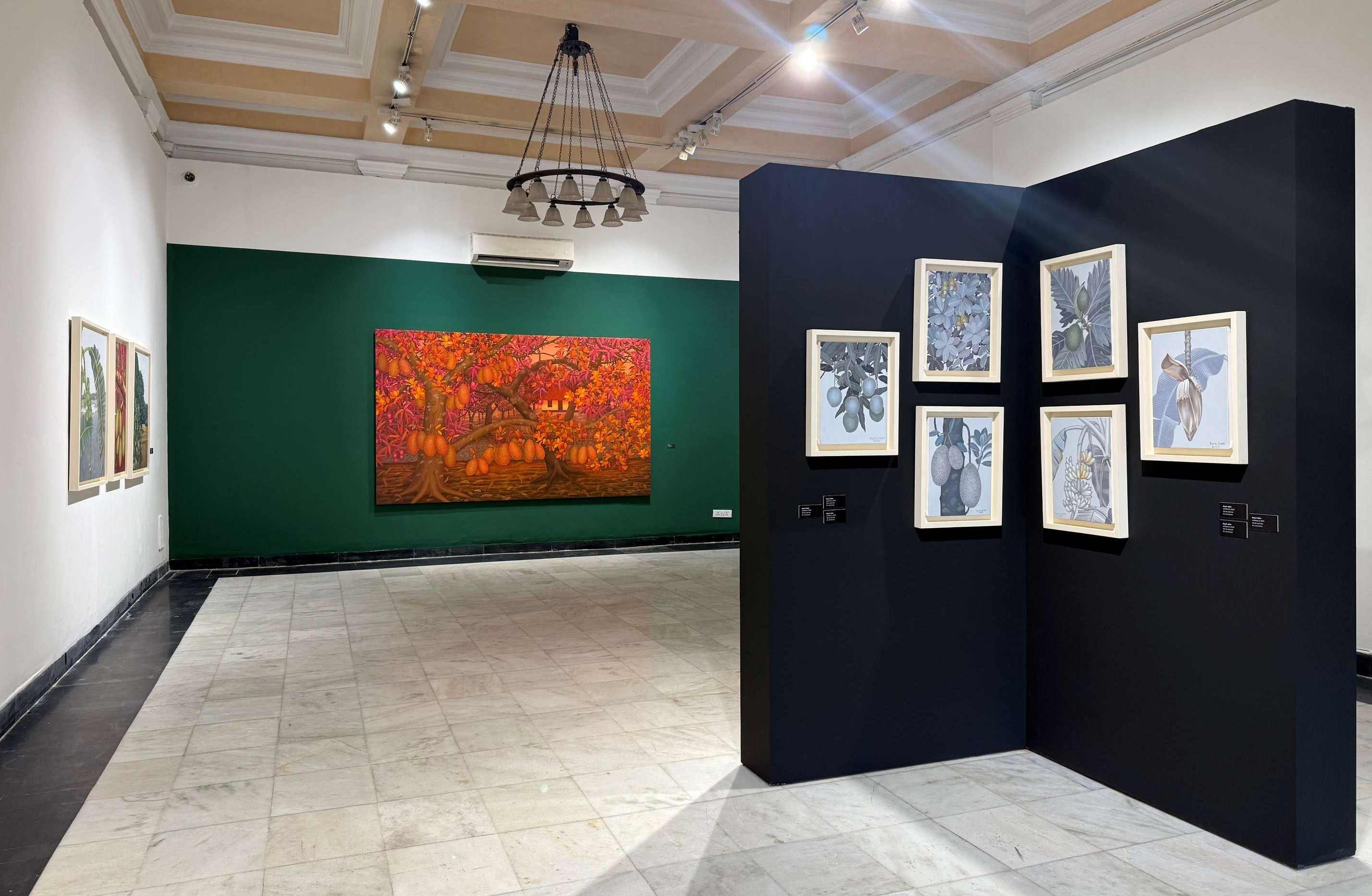
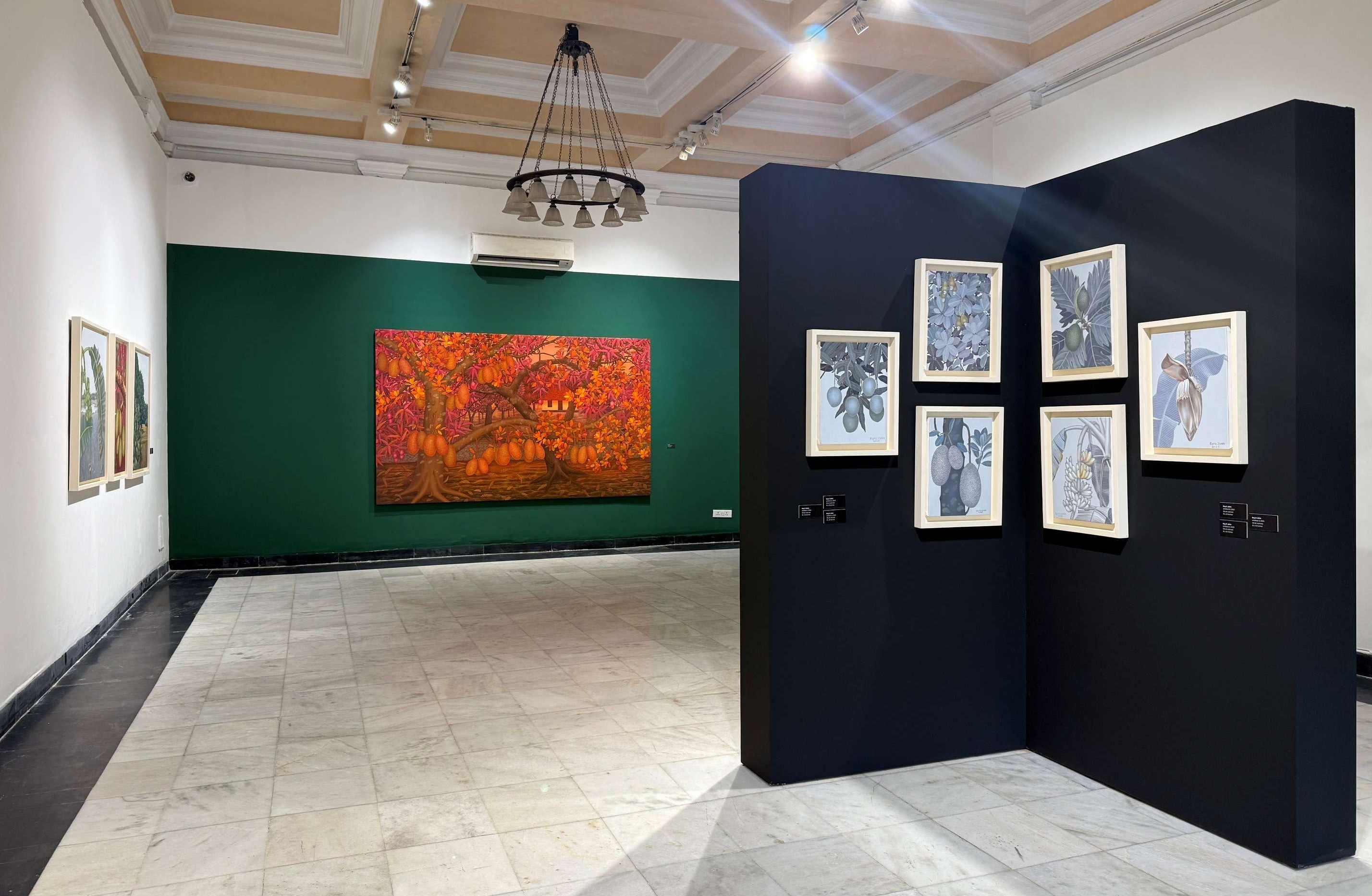
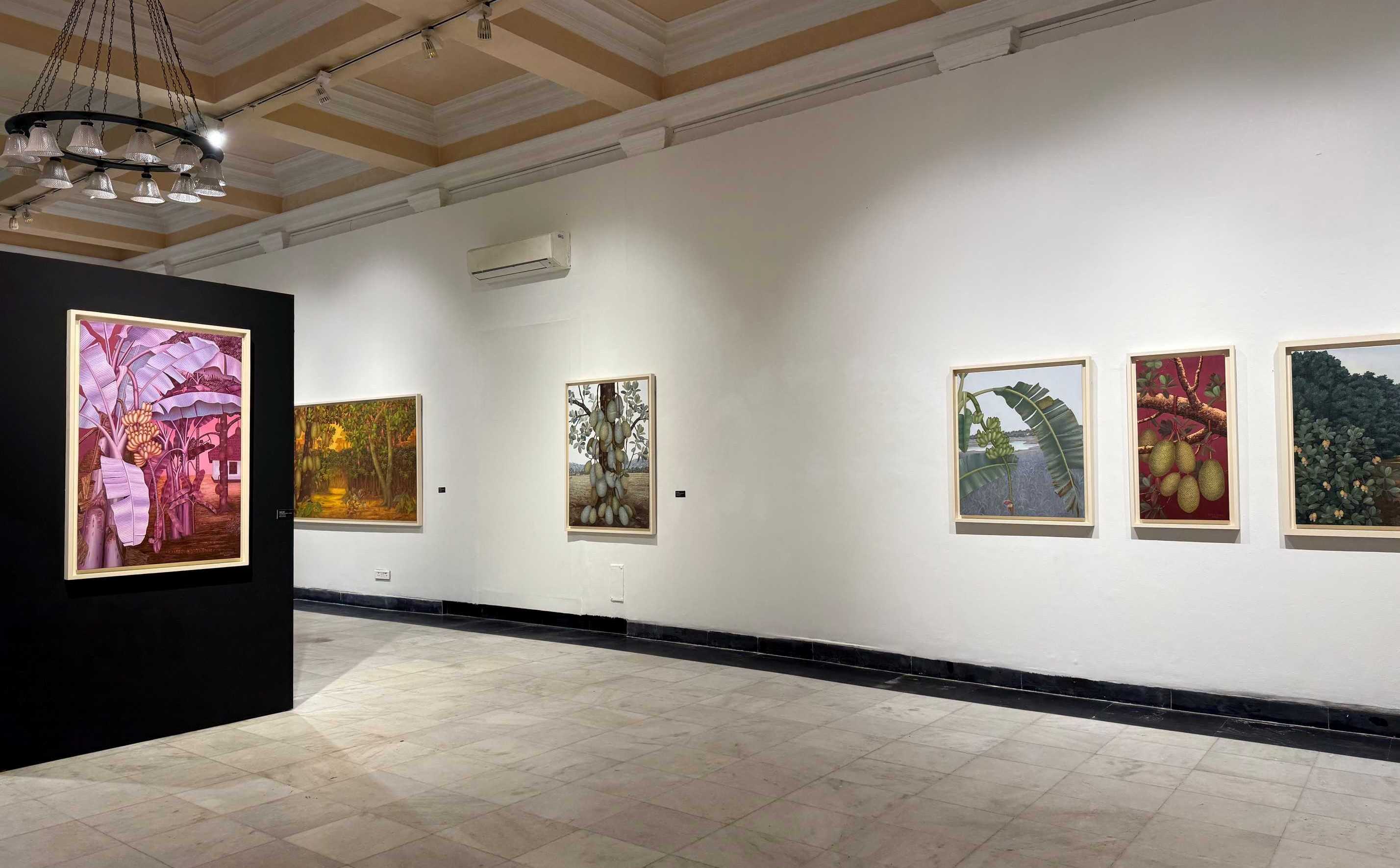
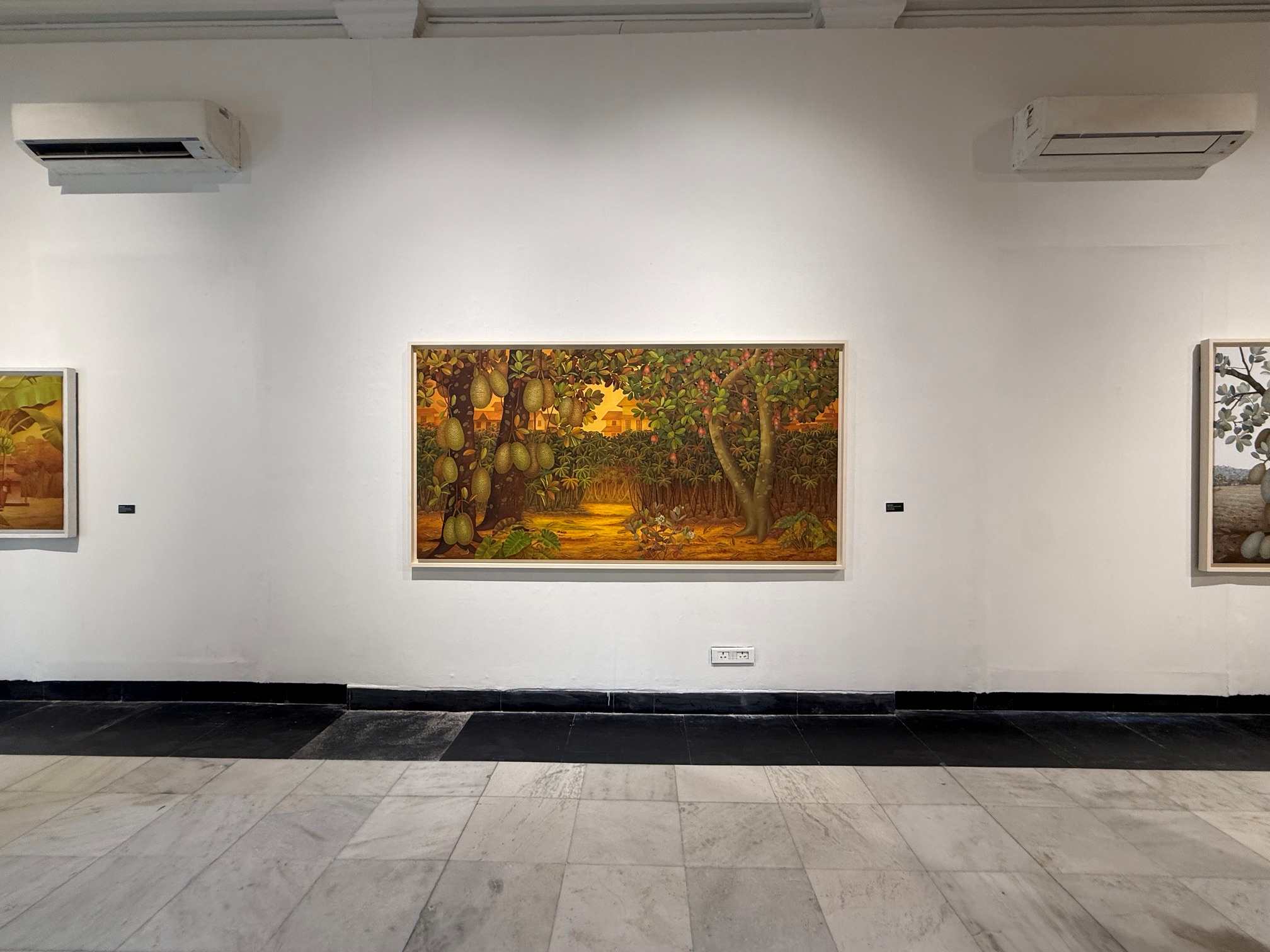
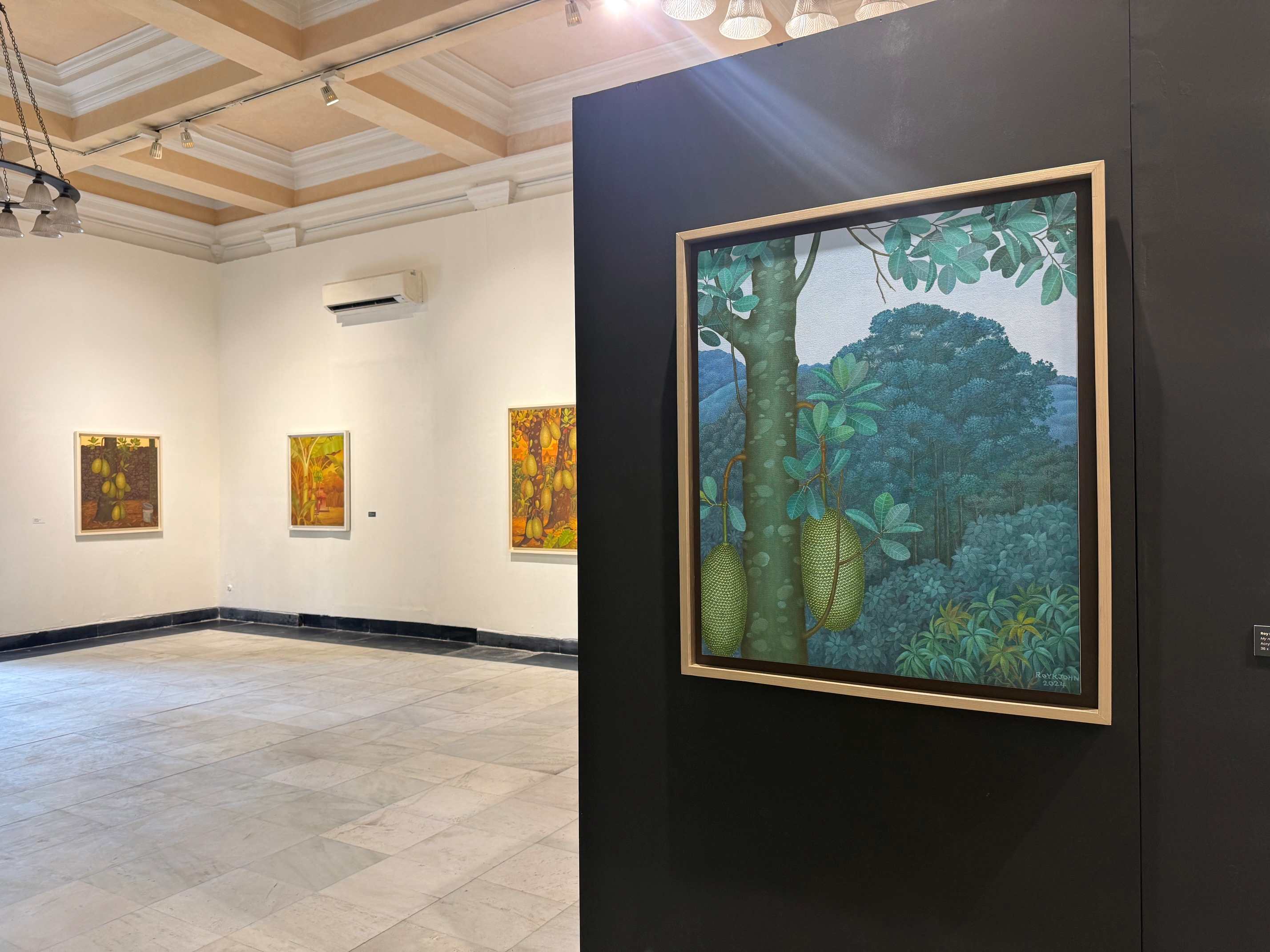
In the large orchard works, this presence becomes gravity. Jackfruit does not merely hang. It presses forward with the weight of a body. Branch, trunk and fruit become a built structure, and the tree begins to behave like architecture.
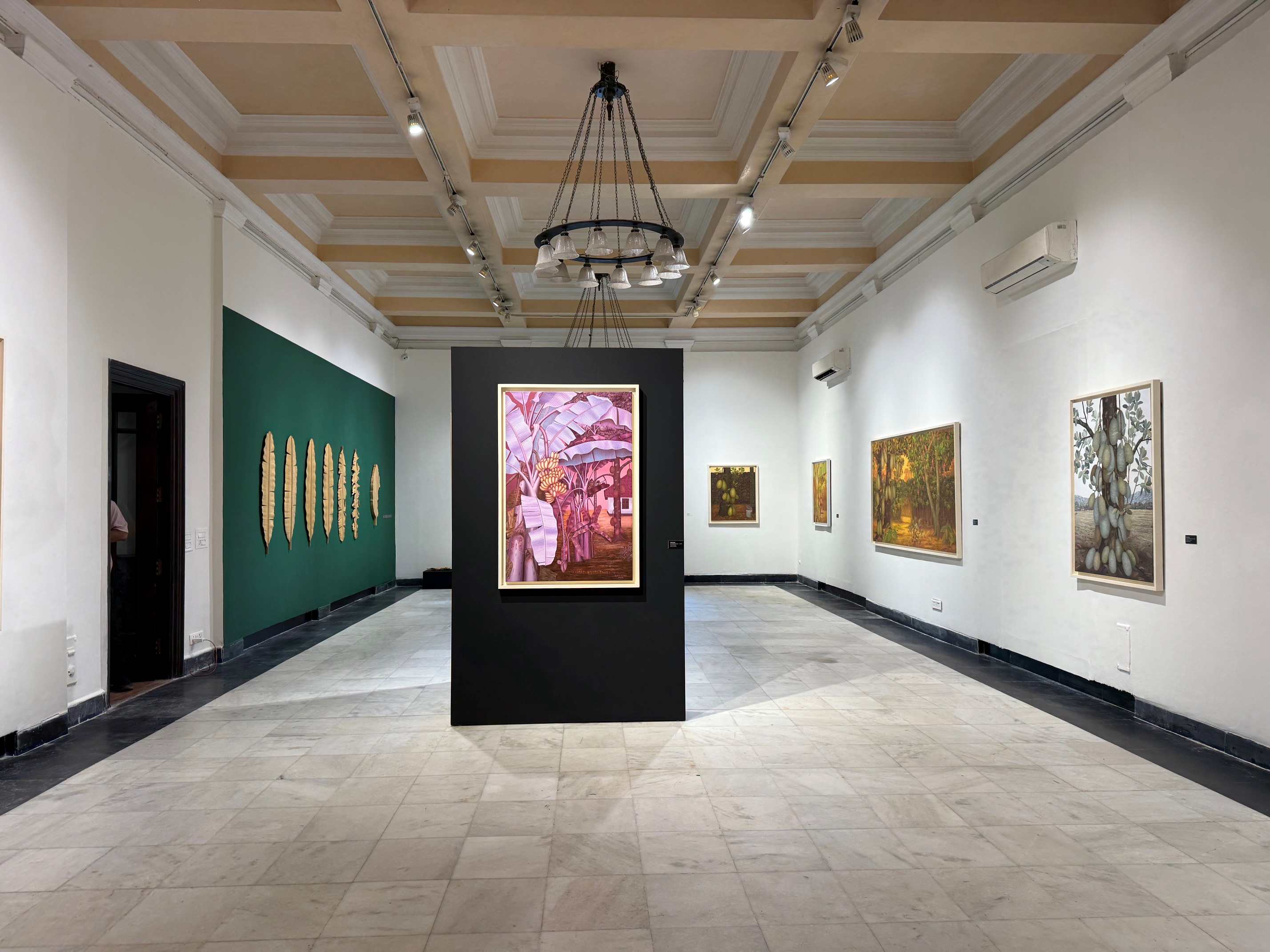
In the banana groves, gravity becomes a screen. Leaves rise, fold and interrupt the view. They open towards a house, then close again. The garden becomes a threshold through which vision is delayed.
The bamboo paintings shift the register once more. The screen becomes a passage. Vertical stems form columns, lattices and narrow openings. The eye no longer looks at the garden from outside. It moves through a rhythm of stems.
In the nocturnal works, passage becomes interior. Blue green foliage gathers around small signs of habitation: a roof, a wall, a window, a light held at a distance. The garden is no longer only abundant. It is watchful. Birds sit inside these worlds as quiet witnesses, holding the surface between stillness and life.
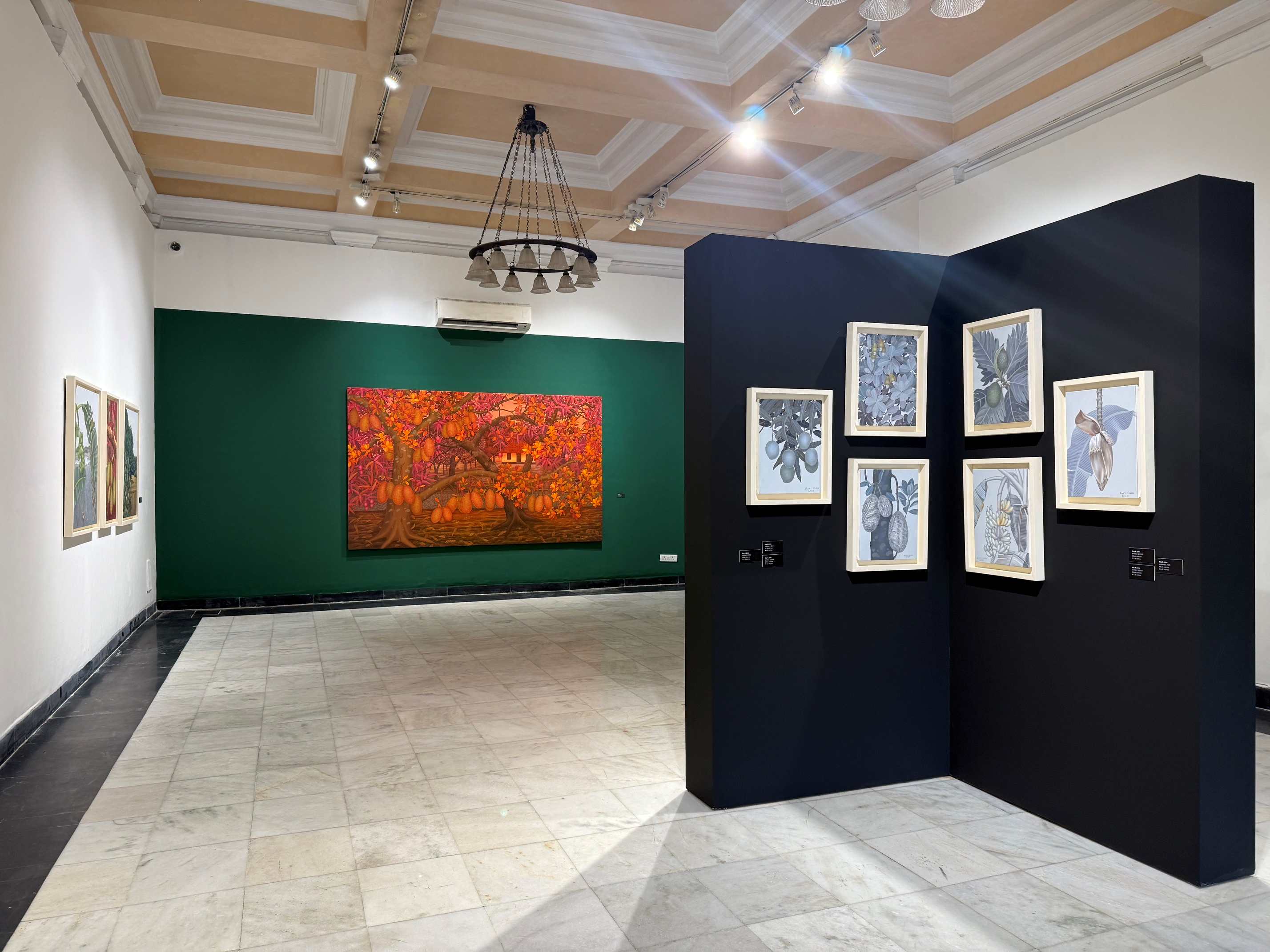
The smaller botanical studies reverse the scale. Abundance becomes attention. Leaf, fruit and flower are isolated, restrained and closely observed, revealing the discipline beneath the larger works. The recent wooden leaf forms make the final transformation. Attention becomes matter. The leaf leaves the image and becomes object, remnant, cut form and material memory.
These works may first seem to be landscapes. They are not landscapes as distant views. They are charged pictorial fields in which landscape becomes an epistemology of seeing: a way of knowing through leaf, fruit, surface, concealment and return.
??? / Kani: Garden as First Sight proposes Roy K John as a painter of visual thresholds. His beauty is not a decorative escape. It is disciplined attention. The leaves do not merely surround the view. They teach us how to see.
Satyajit Dave
Show less