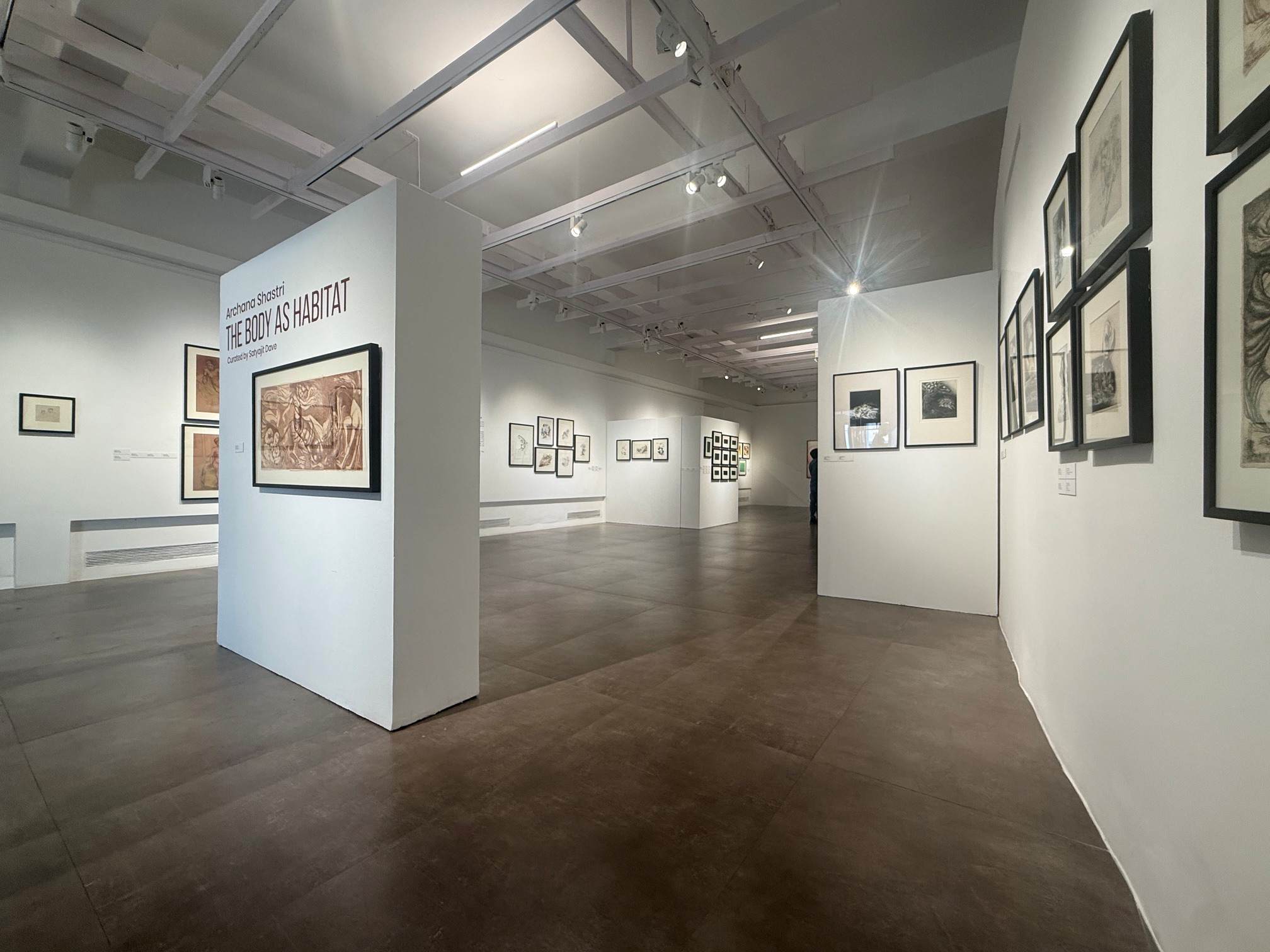
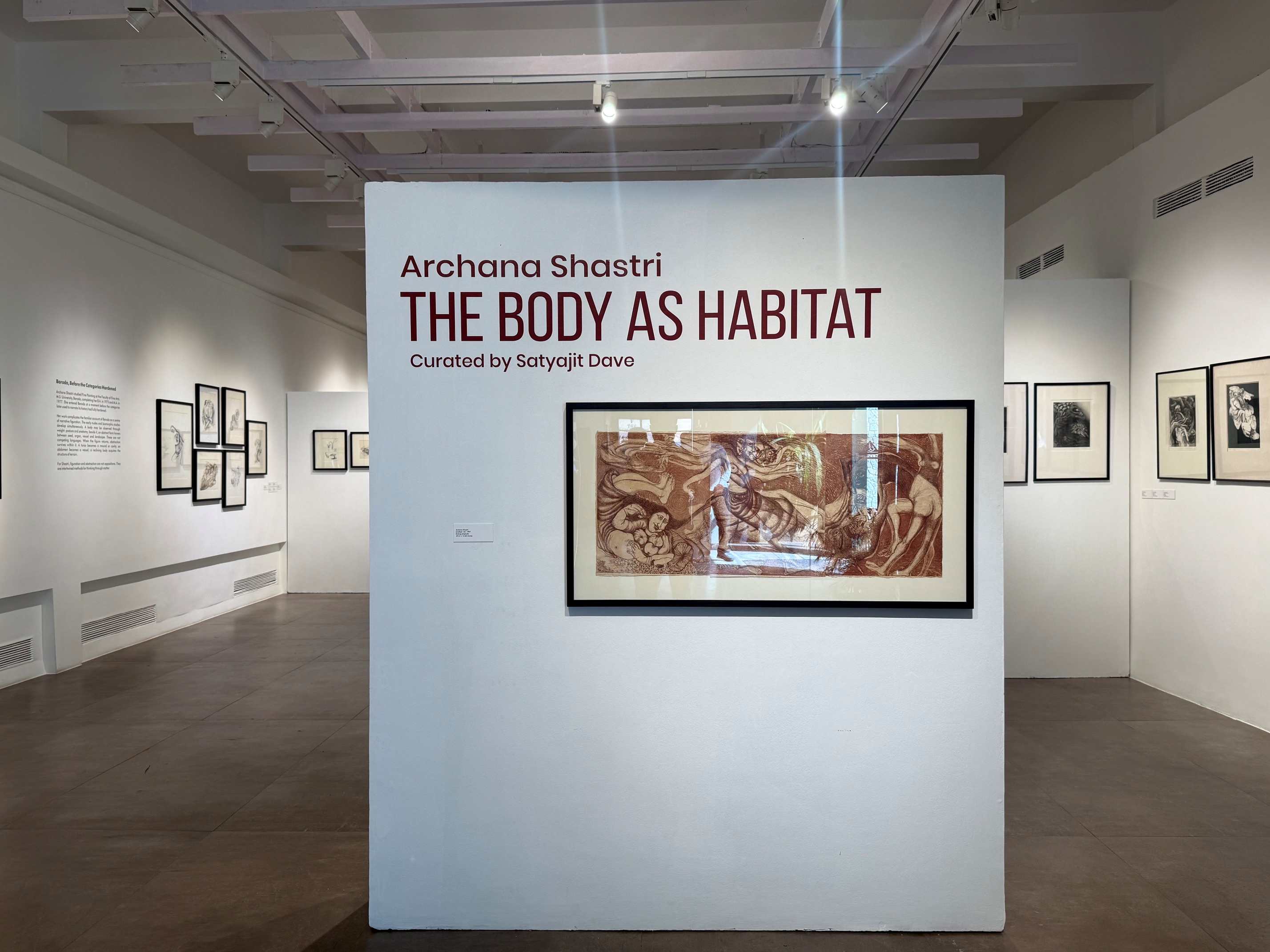
Archana Shastri’s practice asks to be approached through the body, but not the body as portrait,
anatomy, or symbol alone. In her drawings, etchings, lithographs, mixed media works, watercolours, ceramics and drawings on stone, the body becomes a place. It shelters, absorbs, remembers,
performs...
Show More
Archana Shastri’s practice asks to be approached through the body, but not the body as portrait,
anatomy, or symbol alone. In her drawings, etchings, lithographs, mixed media works, watercolours, ceramics and drawings on stone, the body becomes a place. It shelters, absorbs, remembers,
performs and transforms. It is at once figure, landscape, cloth, vessel, stage and interior world.
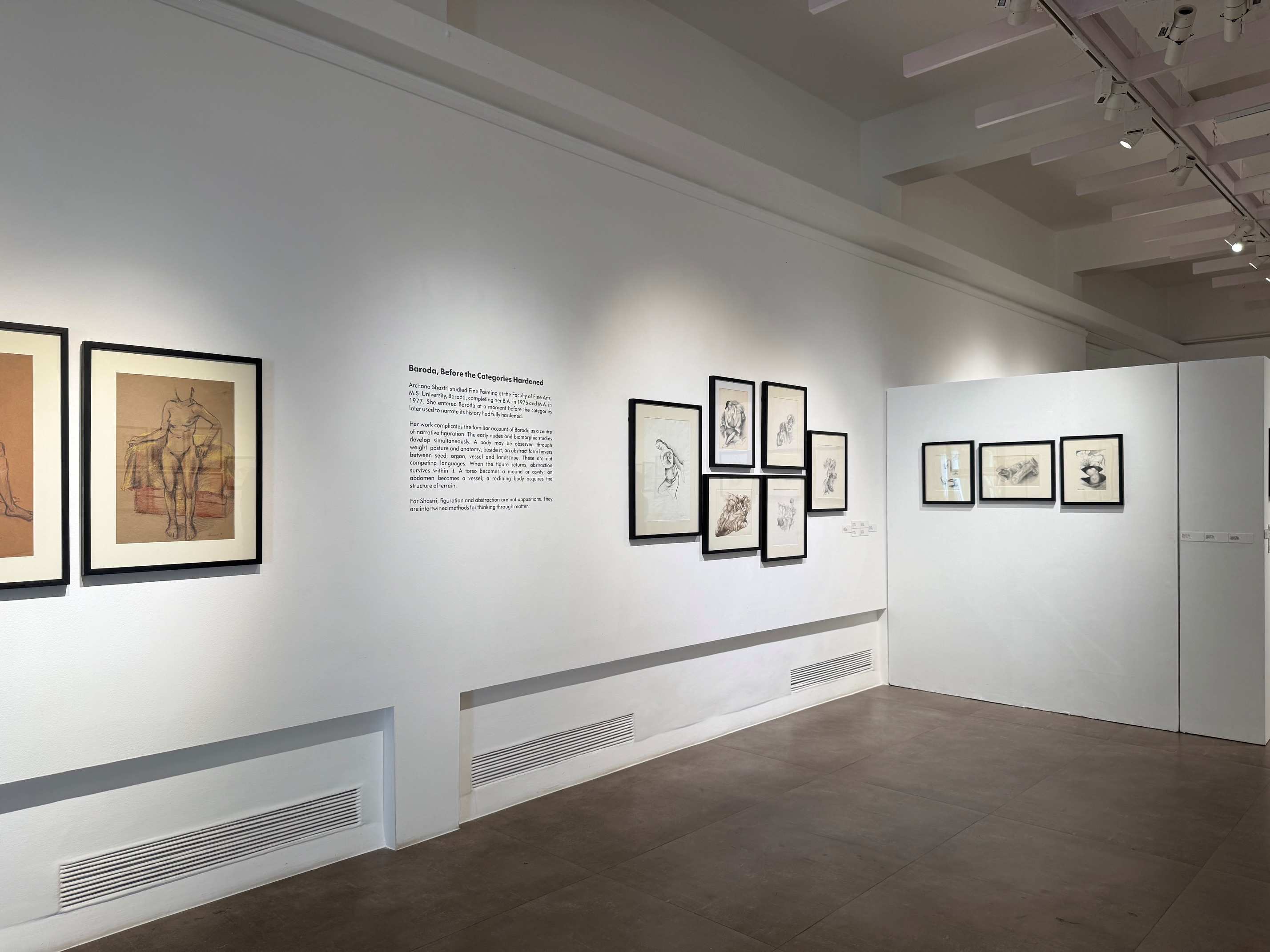
Trained in Fine Painting at the Faculty of Fine Arts, M.S. University, Baroda, Shastri emerged from one
of the most fertile artistic environments of post-independence India. Yet her work does not sit
comfortably within a single school or category. It carries the seriousness of Baroda’s figurative and
narrative traditions, but turns away from the overtly public, anecdotal and social registers often
associated with that history. Her images are more inward, more bodily, more intimate. They unfold
through touch, pressure, enclosure and repetition.
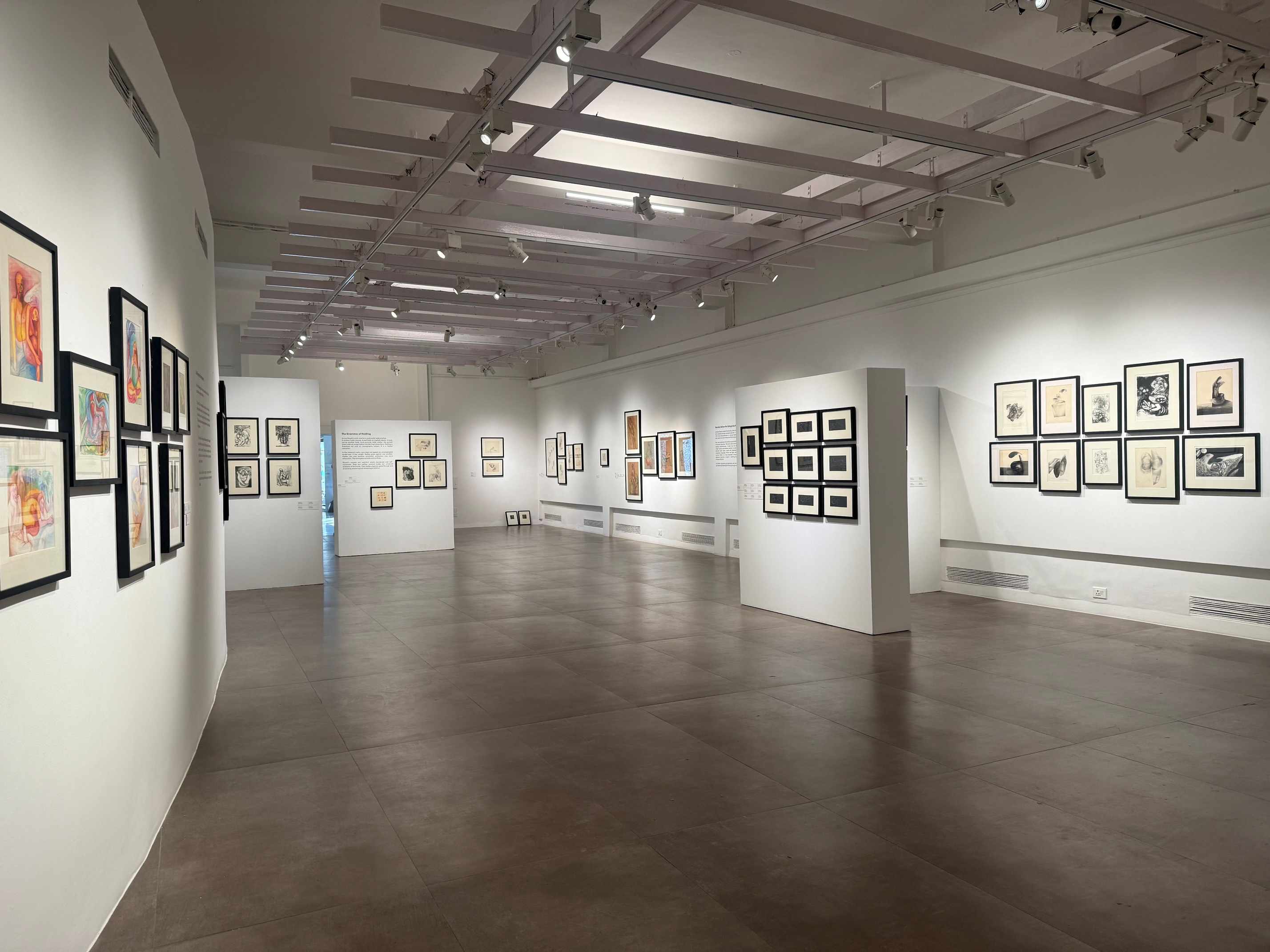
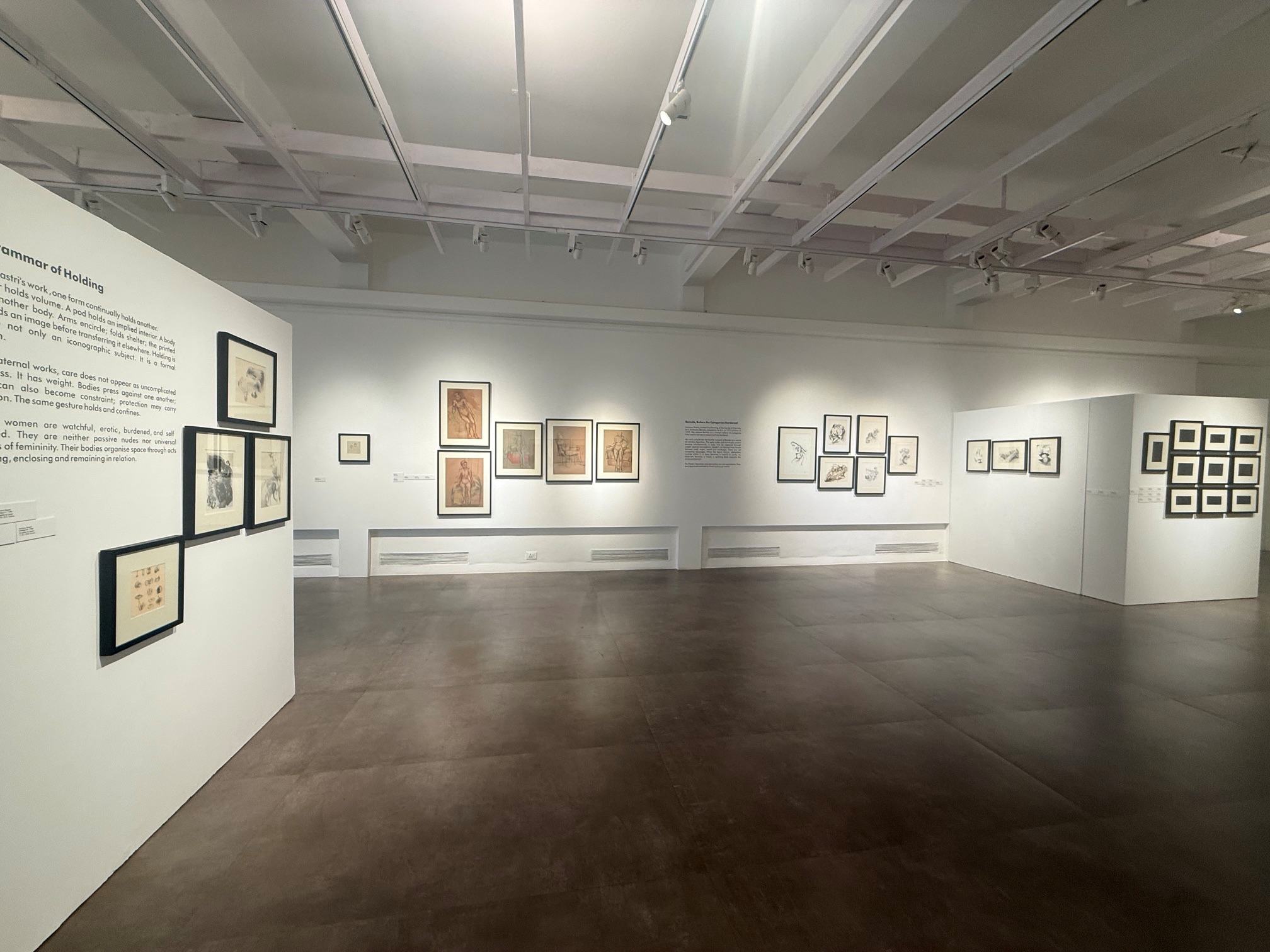
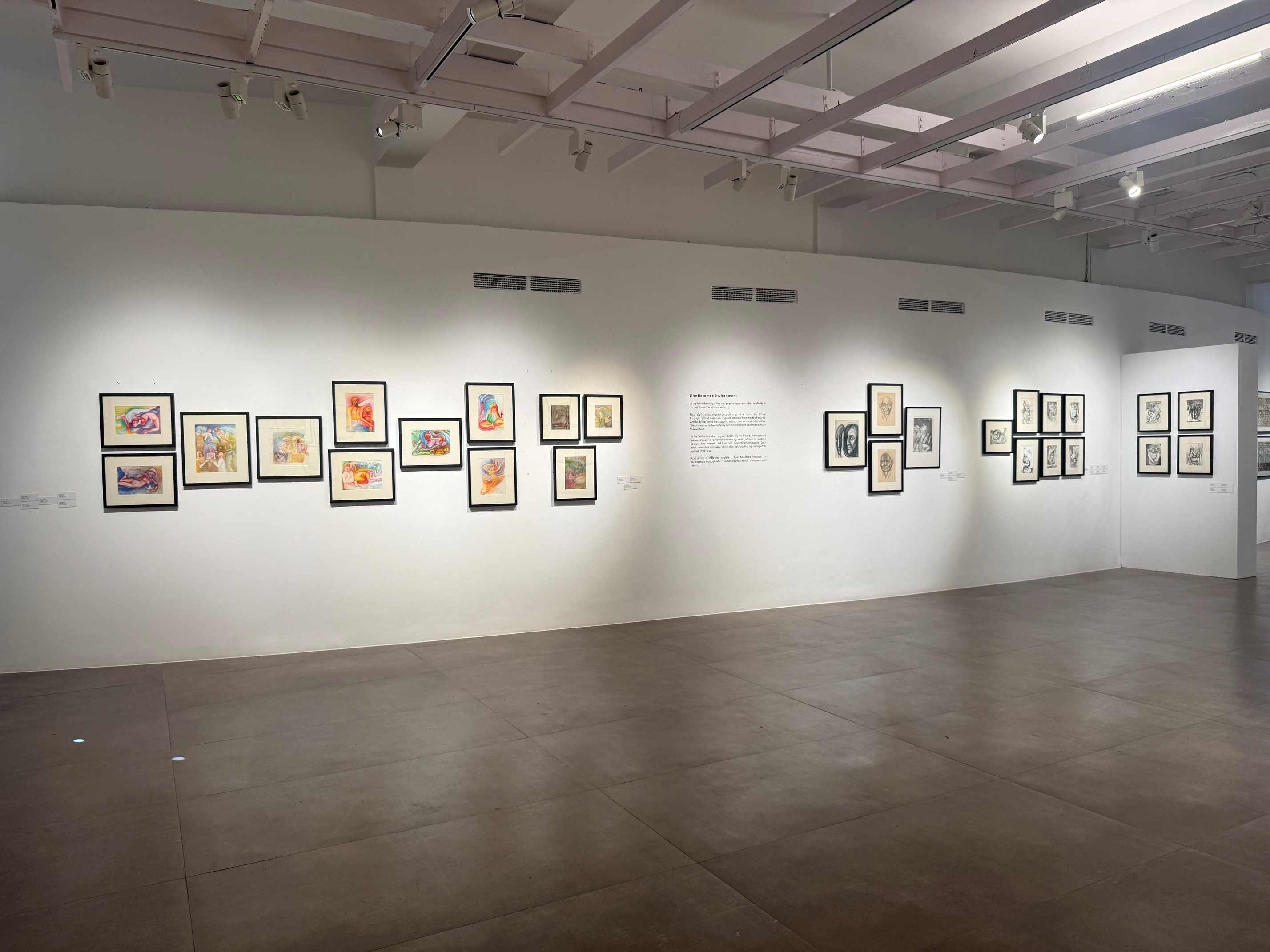
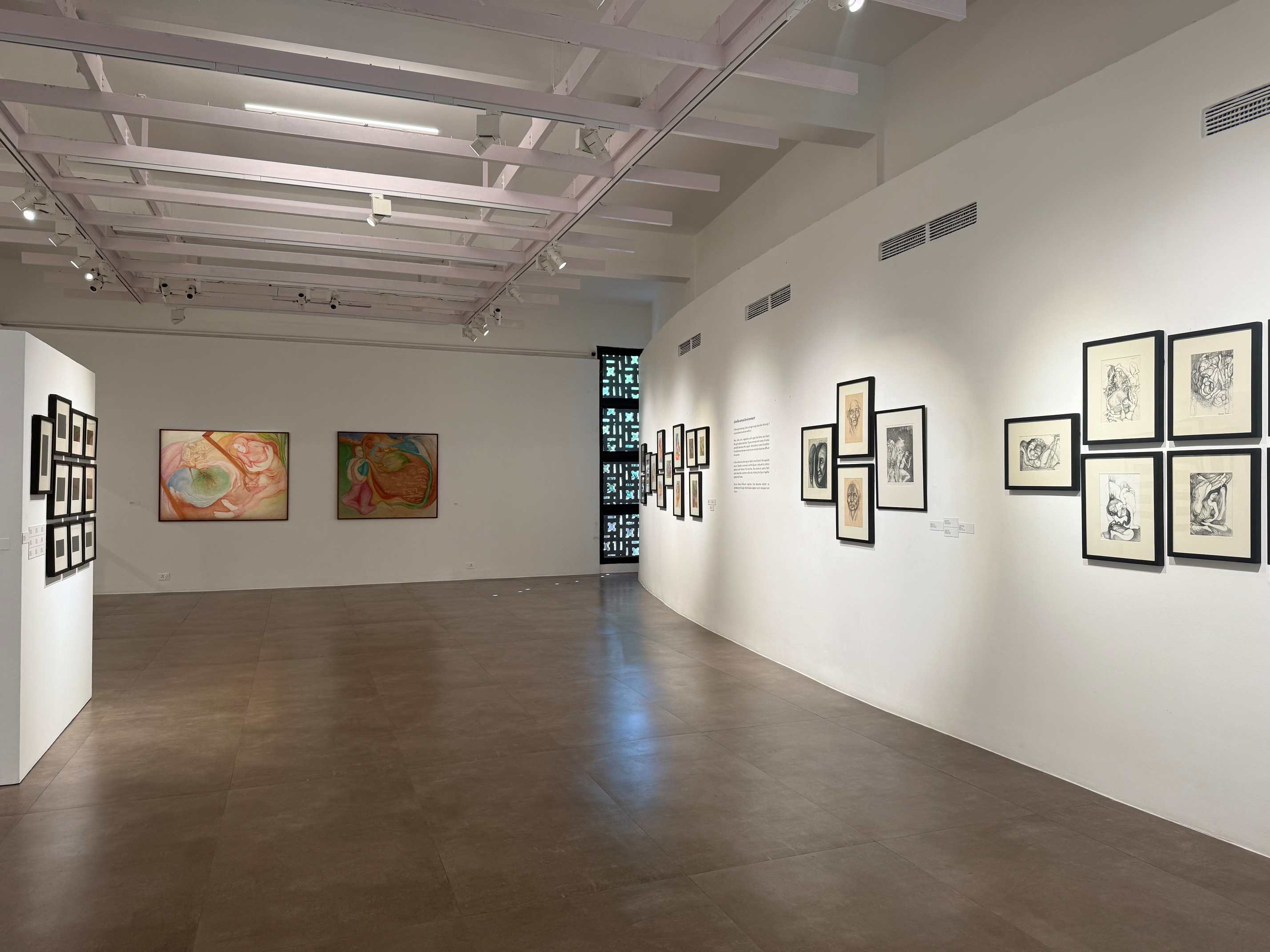
Across the works, figures recline, curl, merge, carry, nurse, watch and drift. Female bodies are not
passive nudes arranged for the viewer’s possession. They are unstable centres of energy. They
stretch across the paper, generate space around themselves, and transform into terrain, bed, river,
cloud or chamber. In the mother-child etchings, care is neither sentimental nor decorative. It is
physical, dense and charged. The maternal body appears as a site of labour, shelter and vulnerability,
held within fields of swirling line and atmospheric pressure.
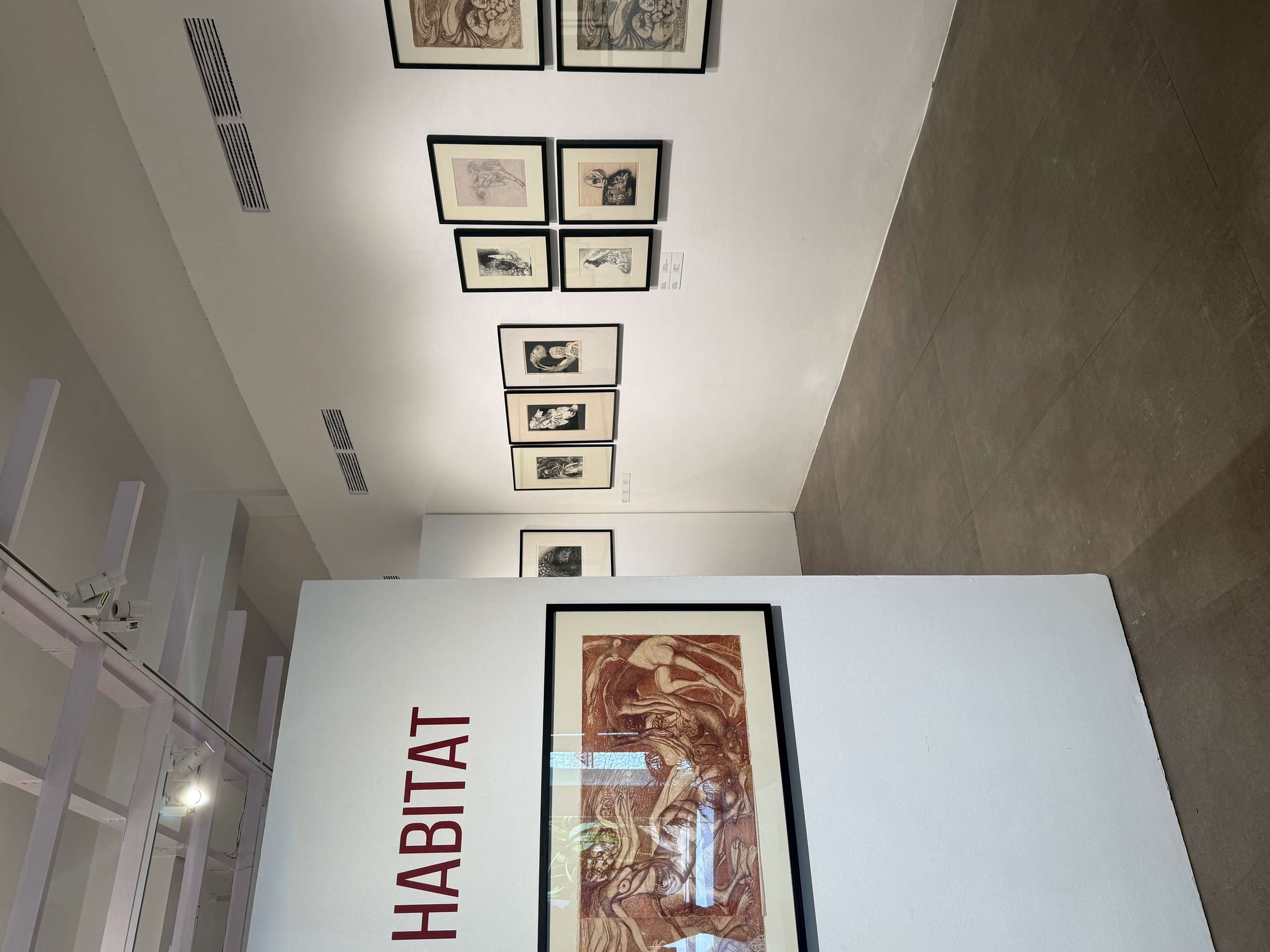
Line is the primary intelligence of Shastri’s practice. It coils, scratches, stains, gathers and searches. In
the etchings and lithographs, line is incised and compressed, often emerging from dense black or
sepia grounds. In the coloured mixed media works, it loosens into a more atmospheric register,
allowing flesh, cloth, landscape and dream to overlap. The recurring use of serial images, print states,
tonal variations and repeated motifs suggests an artist deeply committed to process. Her works do
not simply represent bodies. They test how bodies are made, unmade and remade through surface.
This procedural intelligence connects Shastri’s studio work to her larger life as a design educator,
cultural practitioner and institution builder. Her long association with NIFT, where she was one of its
early senior faculty members and later Professor and Chairperson of Fashion Design and Fashion
Communication, should not be treated as a departure from her art. It is part of the same field of
thought. Her work with costume, craft, textile histories, theatre and museum contexts helps us
understand why cloth, surface, gesture, body and display recur so insistently in her images.
The exhibition therefore resists presenting Shastri only through the familiar language of rediscovery.
She is not simply a forgotten woman artist being returned to visibility. Her practice asks a larger
question: how do certain artistic lives slip out of the record when they move across disciplines,
institutions and forms of cultural labour? Shastri’s accident and later memory loss form one part of
this history of interruption, but they are not the key to the work. The work must be allowed to stand
first.
To reintroduce Archana Shastri today is to revisit late twentieth-century Indian art from another
angle. Her practice complicates the separation between fine art and design, between drawing and
pedagogy, between the studio and the classroom, between the body and the institution. It allows us
to see an artist for whom making was not confined to the framed image alone, but extended into
teaching, costume, craft research, textile thinking and cultural transmission.
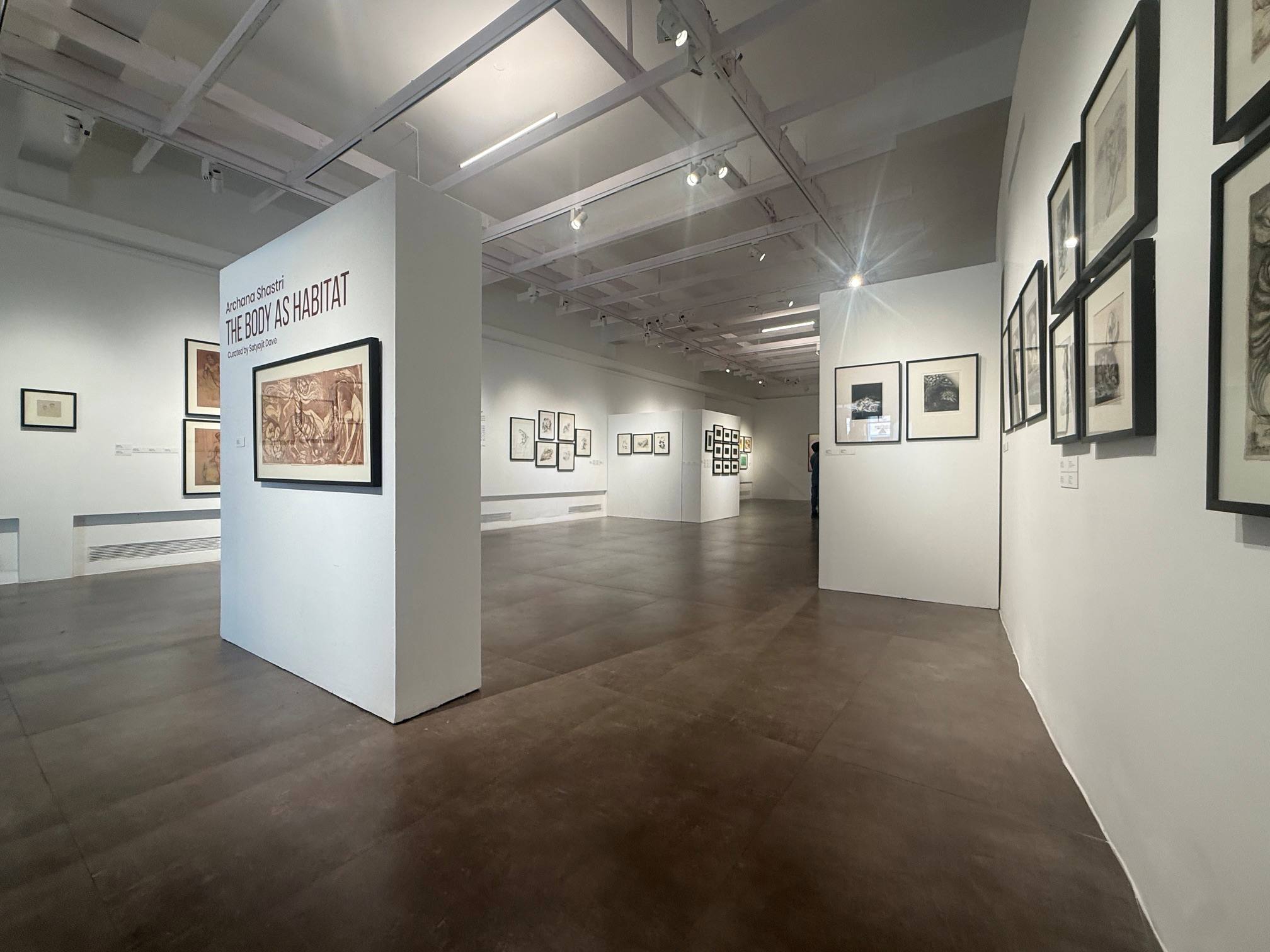
The Body as Habitat places Shastri’s works at the centre of this expanded field. It proposes that her
most powerful contribution lies in her ability to make the body a living site: inhabited, remembered,
taught, staged and remade.
- Satyajit Dave
Show less