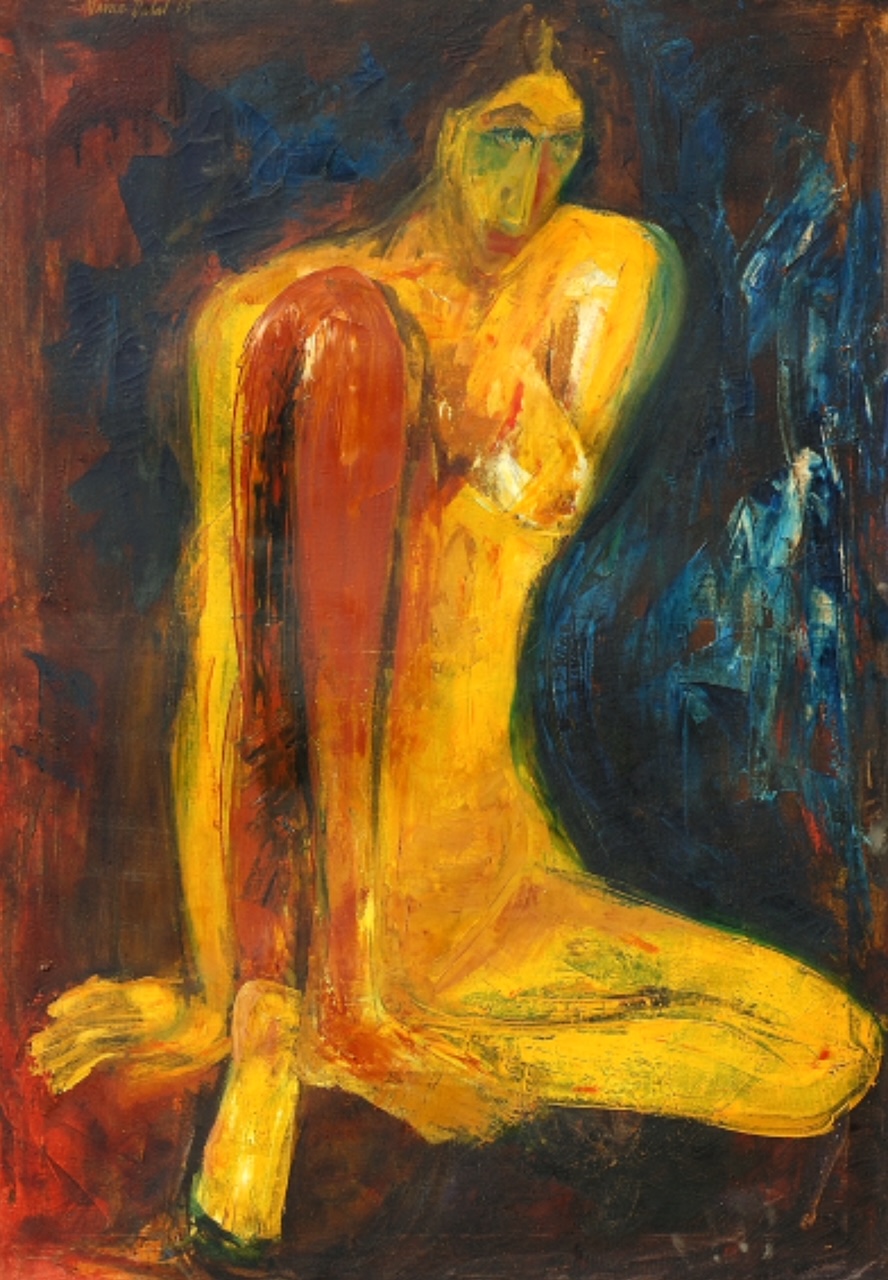
At Kochi Biennale, a Yellow House Asks Why Naina Dalal’s Women Are Yellow
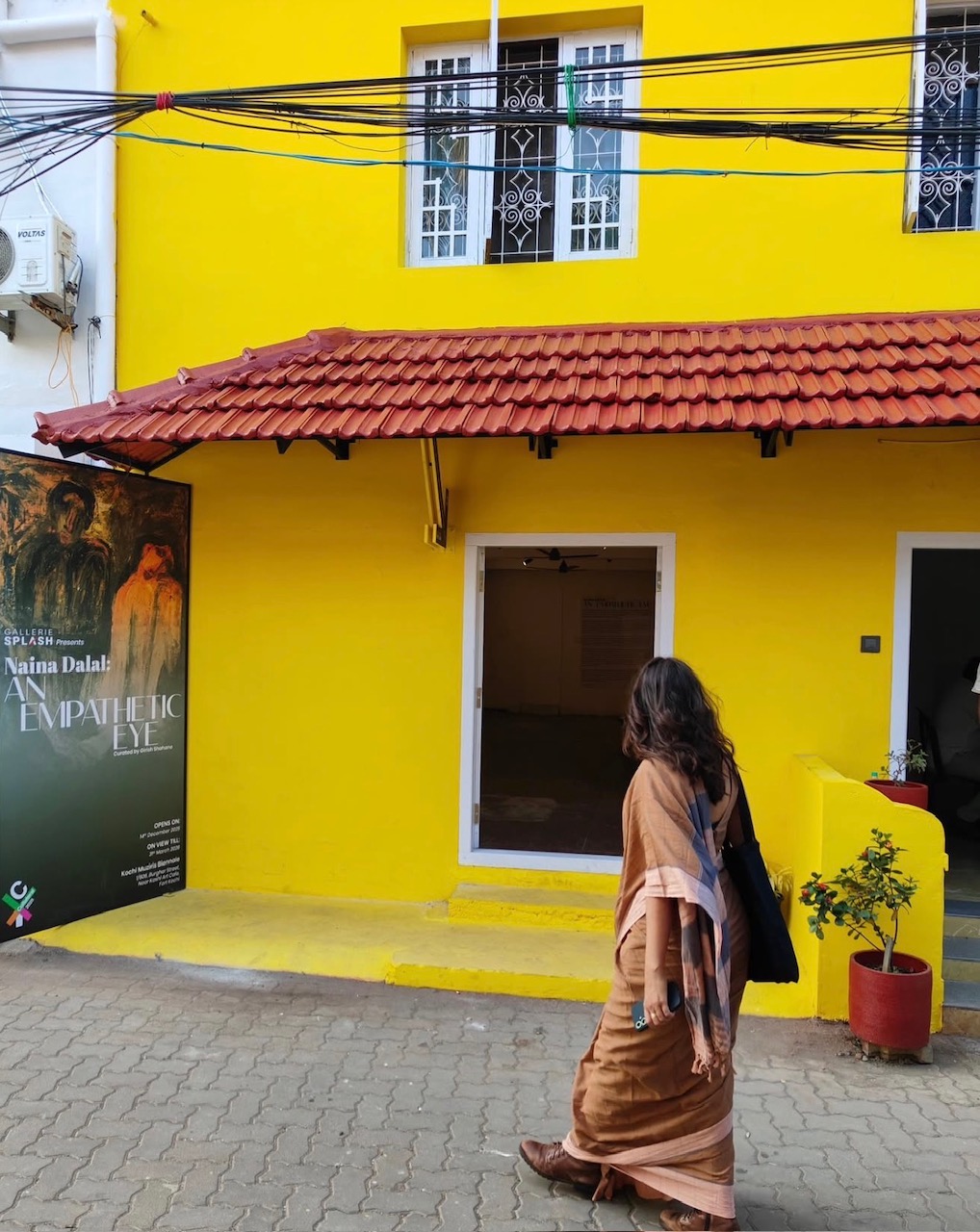
There are houses that do not simply contain space but shape feelings. Gaston Bachelard, in The Poetics of Space, writes of how intimate places are absorbed into memory, how a house becomes a “psychic state” rather than an object. On Burgher Street in Fort Kochi, the Yellow House seems to work in precisely this way. People slow down as they pass. Children tug at sleeves and ask, “What is this yellow house?”.
Although Dalal is notably eyed for the tactile multitude of her printmaking, her paintings and watercolours reveal an acutely pensive engagement with colour. Yellow palpably returns across decades, shaping bodies and landscapes with restraint. It is a colour of unspeaking resilience, holding the soul without insistence.
A Home for Compassion
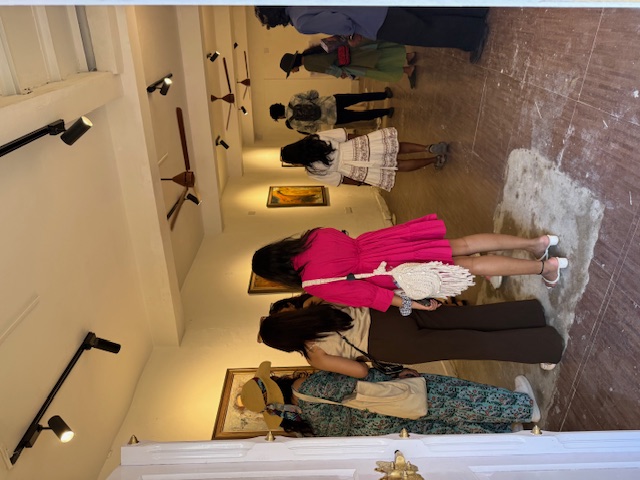
Inside the Yellow House, space unfolds gently. Corners of compassion, set of stairs, and landings invites pause that stirs an empathetic eye. Stairs are not merely functional but imaginative, allowing the body to experience ascent and descent as emotional movement. Here, Dalal’s works accompany that movement. Light slides across paper and canvas while textures reveal themselves gently.
@galleriesplash
The house does not frame the art as spectacle. Instead, it shelters it, much like the idea of the house as a nest which is protective, inward, attuned to reverie. The artworks seem less installed than housed.
@galleriesplash
In Dalal’s landscapes, yellow often becomes earth rather than sky. It holds the figure steady, offering ground rather than escape. There is melancholy here, but also assurance. Yellow does not simply dissolve the body into light, it tries and anchors it.
Curator Girish Shahane subtly guides this experience through the flow and trajectory of rooms as the exhibition concentrates on three primary mediums: oil on canvas, ink and watercolour, and collagraphs, each interacting with other. One room is devoted to collagraphs, revealing how Dalal elevated the medium through texture, pressure, and emotional density.
As Shahane notes:
“Naina Dalal is very attentive to a different kind of emotional state that her characters represent, which is contained in the vessel of karuna (compassion), a sorrow built out of compassion.”
This dialogue between colour and architecture feels deliberate, even if unspoken. Just as Bachelard describes spaces that allow daydreaming, the Yellow House offers a setting where Dalal’s work can breathe, where inner worlds are not exposed but protected.
At Kochi Biennale, Naina Dalal: An Empathetic Eye becomes more than an exhibition. Inside a house that already invites curiosity and warmth, Dalal’s women seem to settle into their surroundings. Yellow moves from wall to skin, from architecture to emotion. It is an exhibition that begins on the street, in a moment of curiosity, and continues inward, where colour, memory, and empathy interact and hold karuna (compassion).
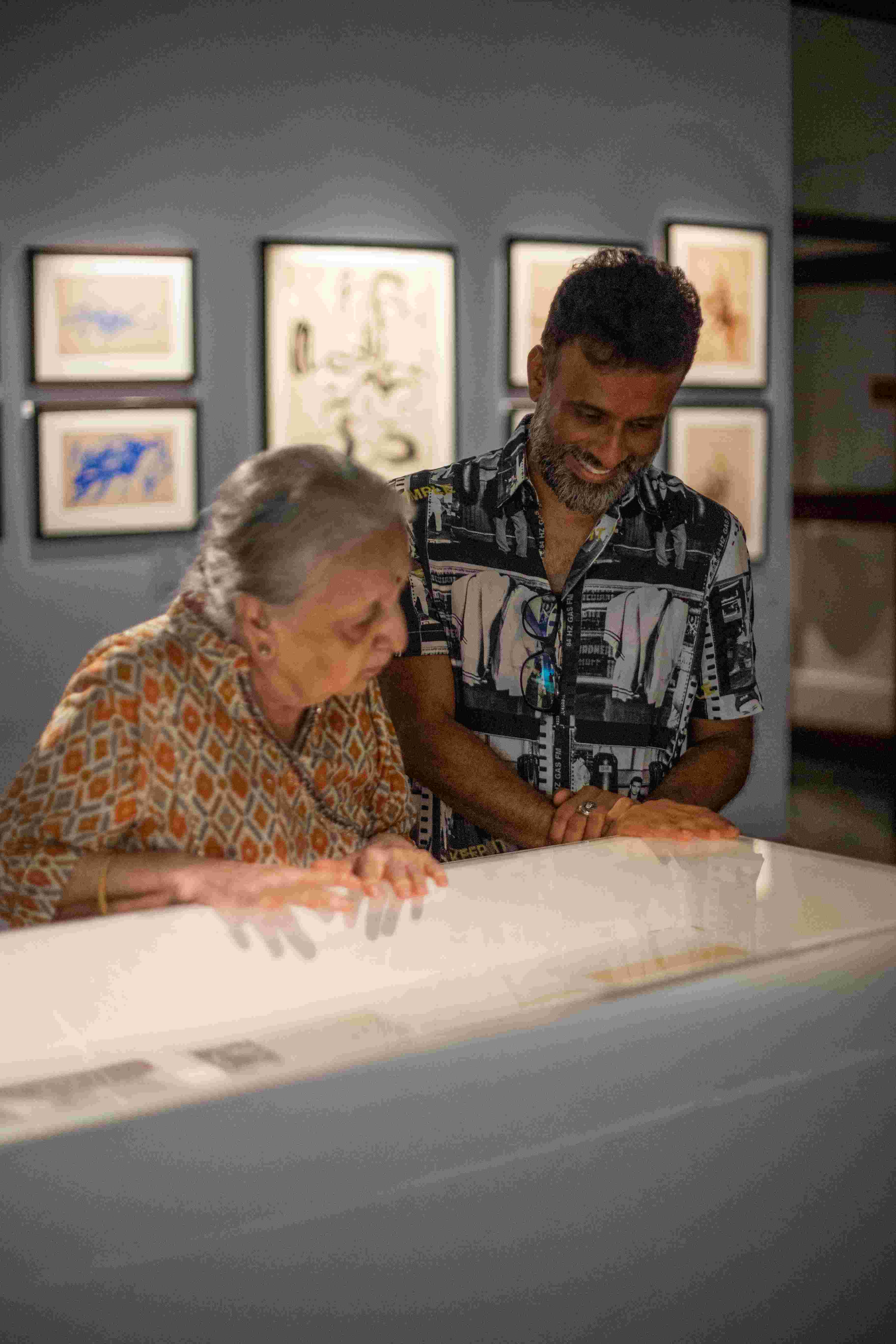
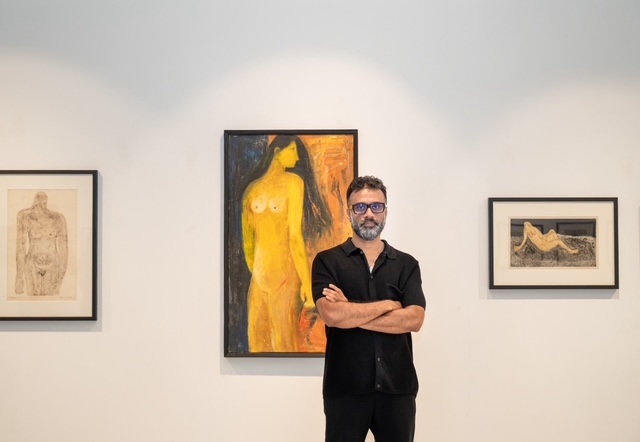
Artist Naina Dalal with Galleriest Jinoy Payyappilly (Pic Courtesy@Katyakrishnan)
A space is never empty, it is lived.
Here, colour becomes that lived space.
And yellow, quietly, becomes home.
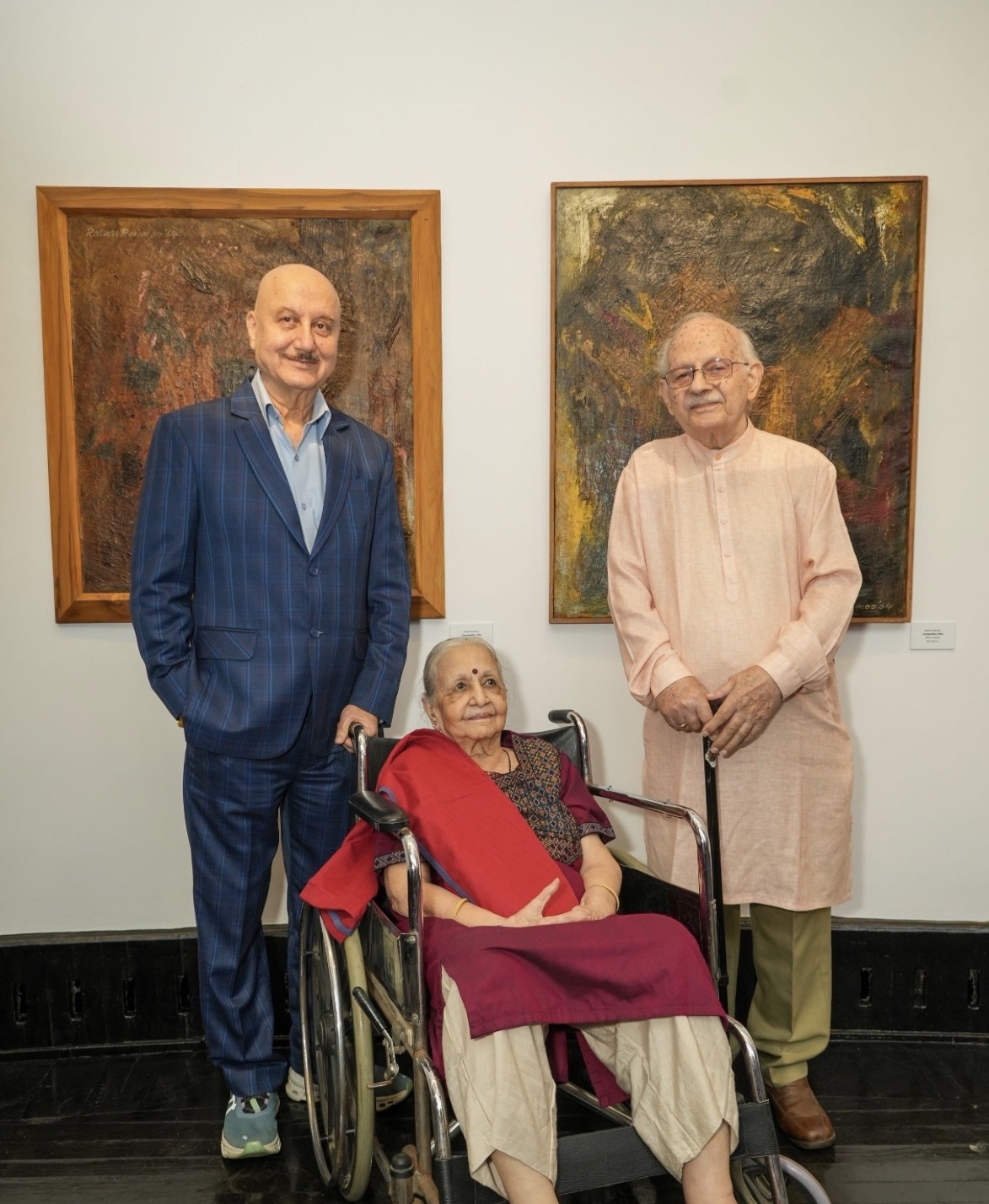
Actor Anupam Kher, Artist Naina Dalal & Ratan Parimoo
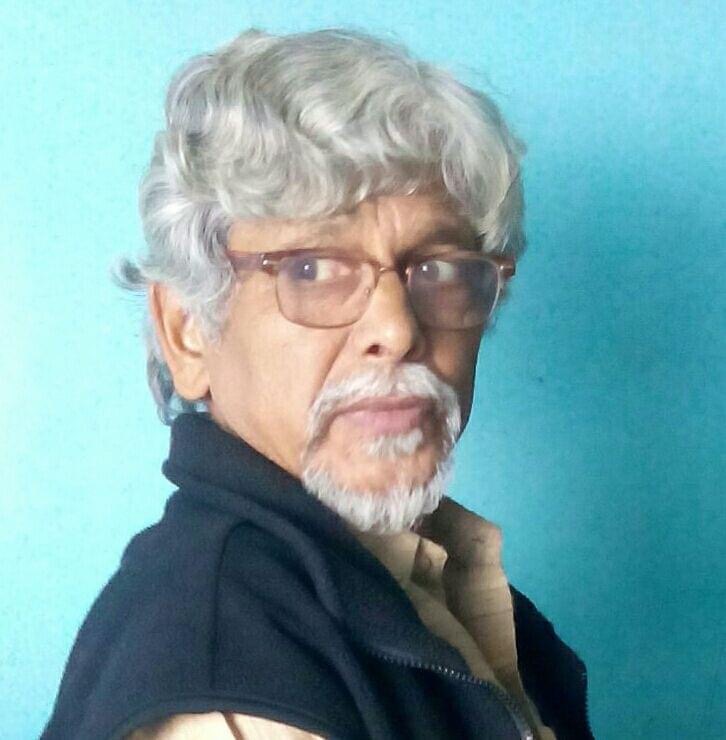
Satyajit Dave, Curator
As Satyajit Dave observes, “The way Naina Dalal paints the eyes of her figures is remarkably sharp and piercing. This intensity emerges from her visceral understanding of human emotion.”
Dalal’s training as a printmaker began in the early 1960s in London, where she studied lithography, and deepened in New York through etching. By the 1980s, working from her home in Baroda and increasingly troubled by the toxic materials central to traditional printmaking, she began to explore collagraphy, a process often dismissed for its apparent ease. In Dalal’s hands, however, collagraphy becomes anything but secondary. Her artworks dilates the expressive and emotional range of the medium, placing it firmly alongside more conventionally esteemed forms of printmaking.
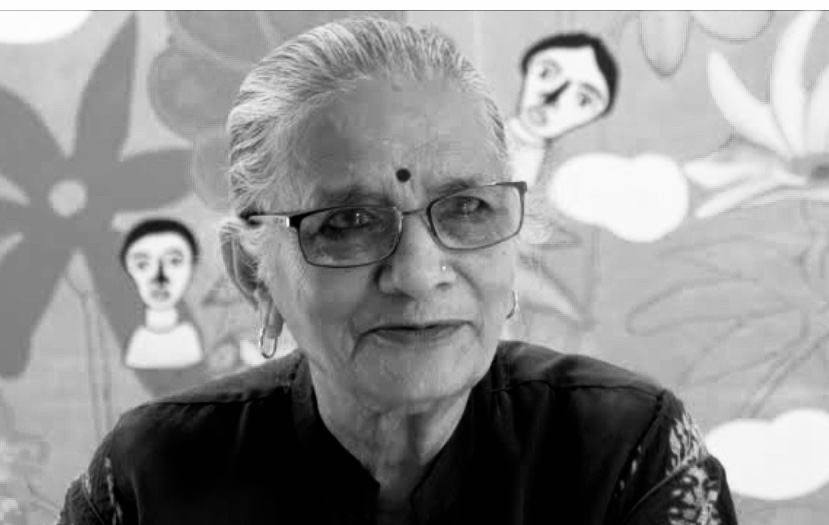
As curator Girish Shahane notes, the renewed attention to artists like Naina Dalal, now 90 years old forms part of a larger, long-overdue effort to widen the narratives of modernism, both globally and within India. Just as earlier histories were narrowed by Eurocentric frames, Indian modernism too has often been told through selective vantage points. The return to Dalal’s work invites a recalibration.
This exhibition asks precisely to consider the point from which a thing is viewed. Dalal’s figures, her mothers, her bodies, her quiet interiors, do not insist on a single reading. They sustain multiple ways of seeing, shaped by time, memory, gender, and lived experience. What once appeared as stillness begins to reveal motion, what seemed solitary opens into relation. The work does not change but our position in relation to it does.
A Kochi Muziris Biennale Invitation
For Kochi Muziris Biennale visitors, resist the rush. You are invited to enter slowly, to linger, and to allow both the house and the works it shelters to offer their many points of view, in yellow.
Naina Dalal: An Empathetic Eye is on view until 31 March 2026 at OY’s Café, Burgher Street, Fort Kochi. Open daily ,10 am - 7pm, Free Entry. Instagram: @galleriesplash.
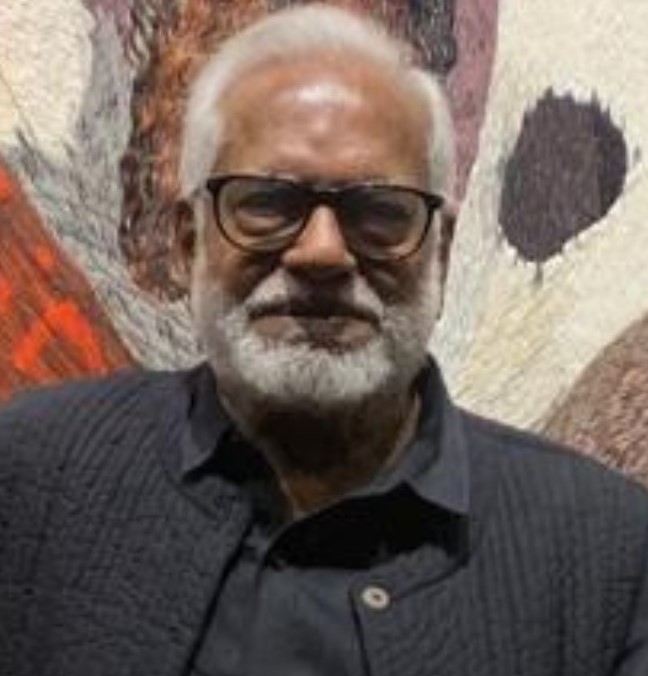
Jinoy Payyappilly (Pic courtesy@galleriesplash)
“Through this exhibition, Gallerie Splash reaffirms its commitment to illuminating underrepresented narratives in Indian art history. Naina Dalal’s practice fusing bold experimentation with profound empathy invites audiences to encounter a silent fire that burns with enduring relevance.”


Leave a Comment