Ratan Parimoo: Grammar of Seeing, Retrospective of Becoming
This exhibition traces abstraction in Ratan Parimoo’s practice not as a stylistic endpoint, but as a long process of formation. It follows the convergence of Parimoo’s eye, hand, intellect, and material understanding into one of the...
Show More
Ratan Parimoo: Grammar of Seeing, Retrospective of Becoming
This exhibition traces abstraction in Ratan Parimoo’s practice not as a stylistic endpoint, but as a long process of formation. It follows the convergence of Parimoo’s eye, hand, intellect, and material understanding into one of the quietly radical bodies of abstract work in modern Indian art.
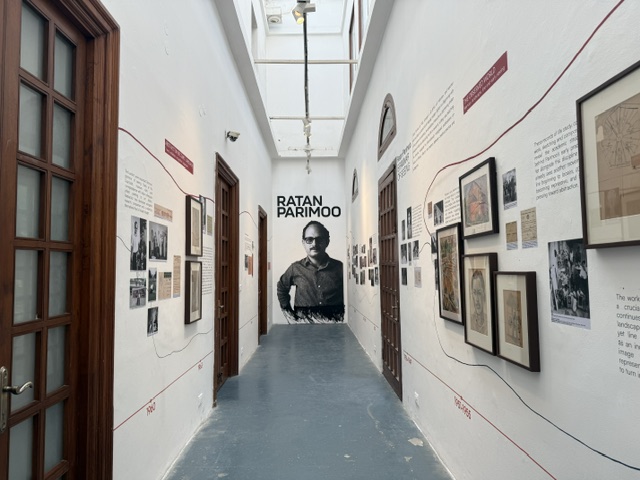
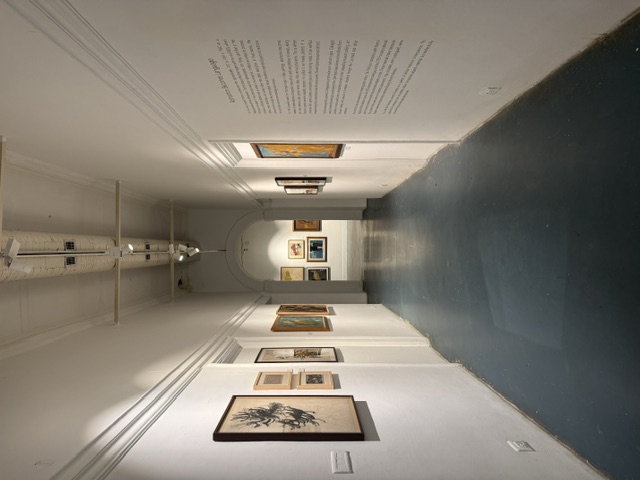
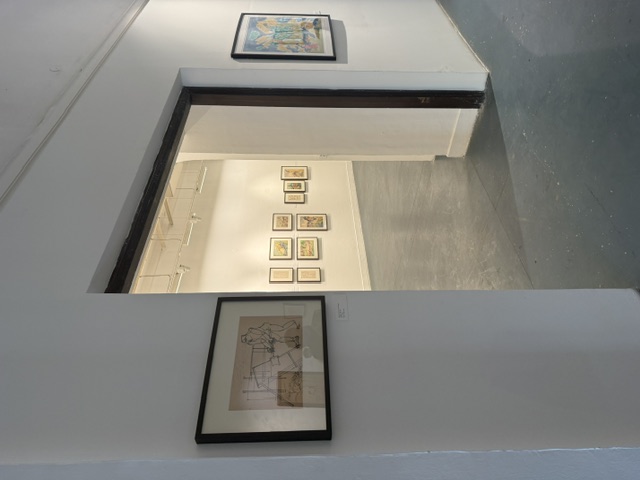
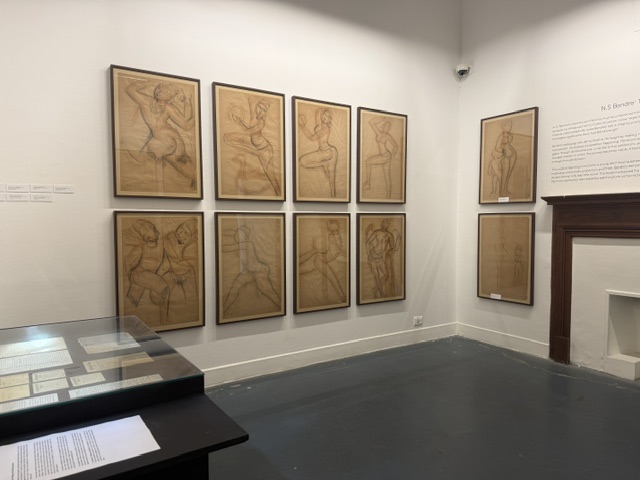
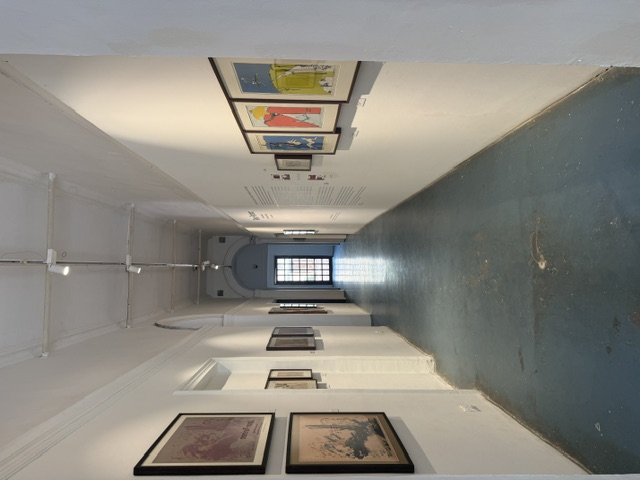
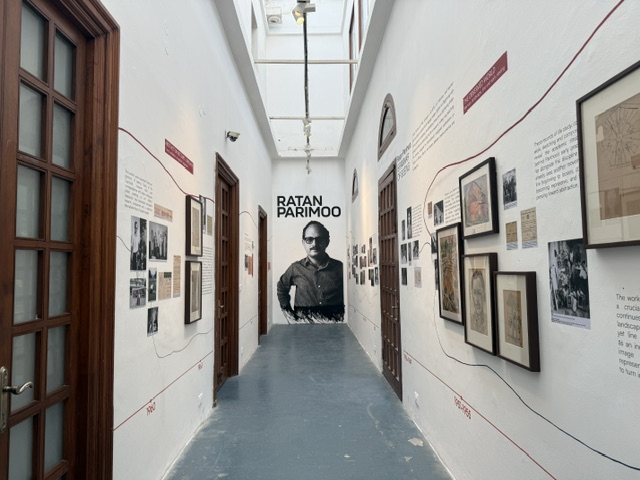
The exhibition unfolds across the CCA building at Bikaner House. The ground floor brings together early figurative, academic, Kashmir-related, landscape, portrait, life study, and student works from the early 1950s. Rather than treating these works as juvenilia, the exhibition presents them as the first evidence of a visual grammar already moving toward abstraction. Line, colour, and space begin to shift beyond description, reorganising the visible world as form.
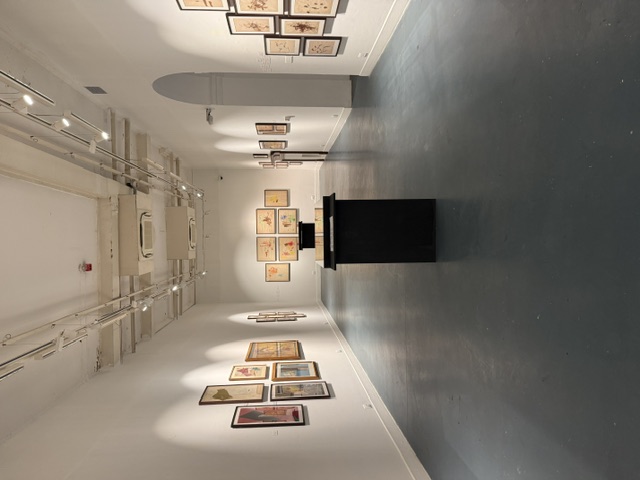
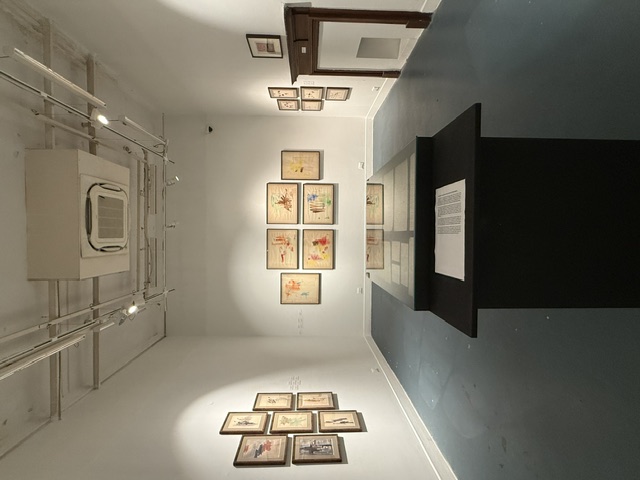
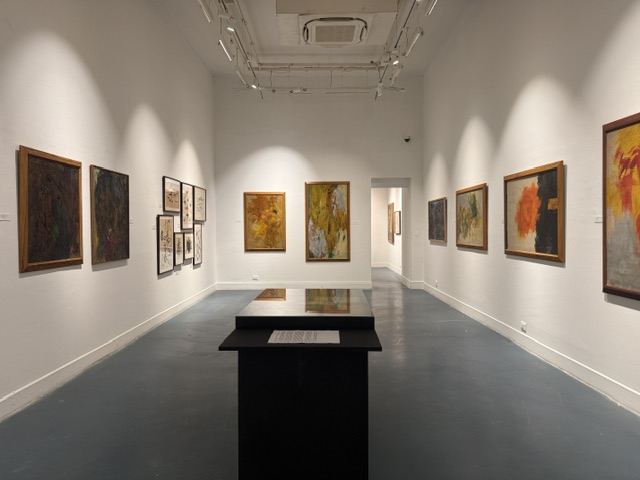
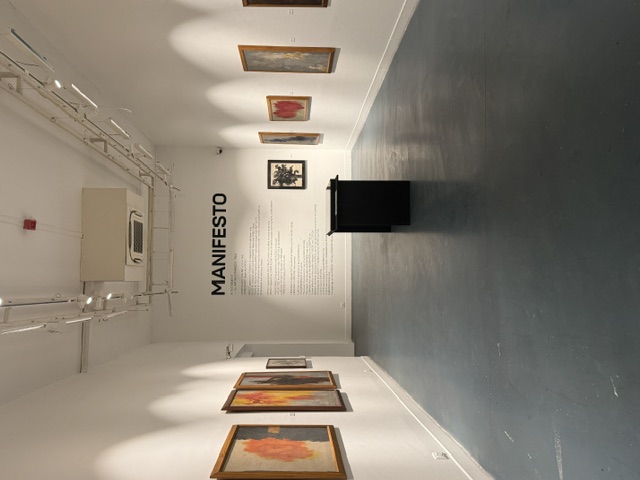
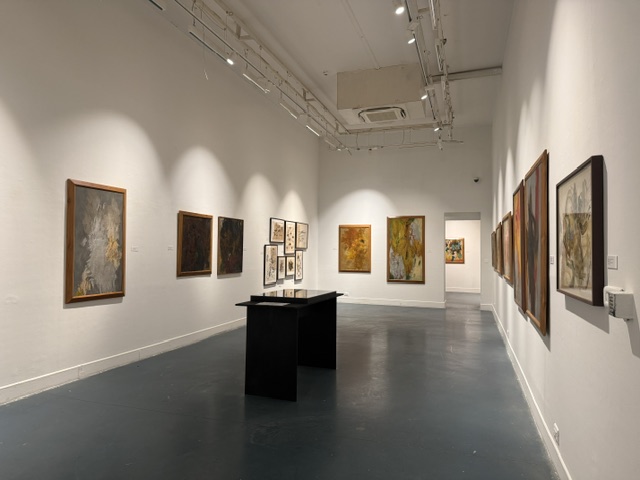
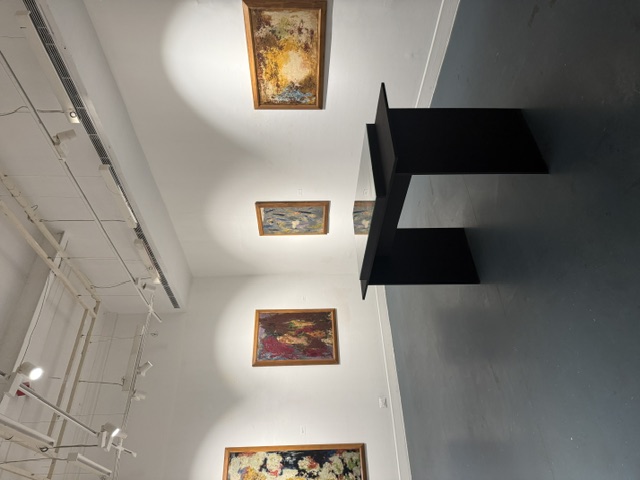
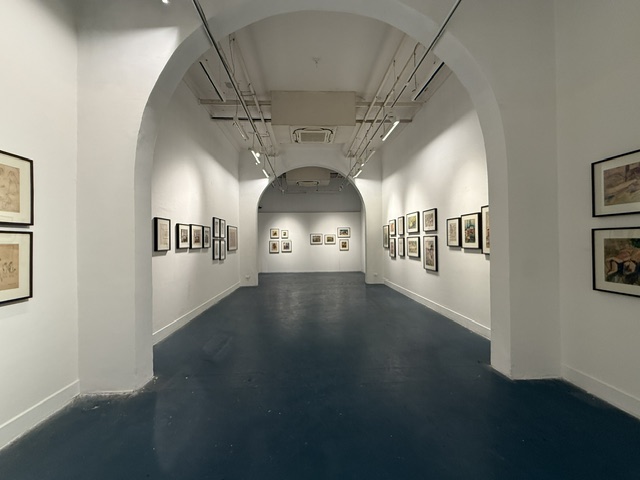
The first floor follows Parimoo’s movement into abstraction from the mid-1950s to 1980. Here, abstraction becomes a language of surface, rhythm, texture, sign, matter, and pictorial intelligence. Early abstract exercises, Baroda Group contexts, the 1959 *Composition* works, experiments with sand and pebbles, collages, configurations, open fields, and later public exhibitions are brought together to reveal the depth of this transformation.
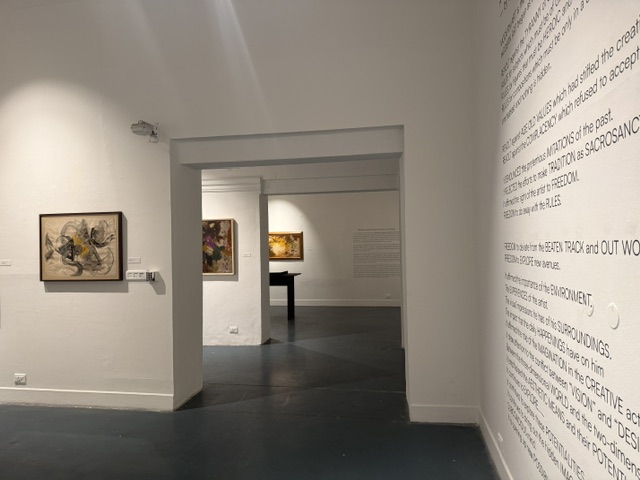
The exhibition is structured through three sections: The Observed World, Between Memory and Method, and Abstraction Becomes Language. Together, they show how Parimoo’s abstraction emerges from observation, perceptual memory, disciplined method, and material experimentation.
The archive forms an essential part of this argument. Credit score cards, assignment cards, letters, Baroda Group catalogues, exhibition invitations, price lists, Courtauld material, lecture notices, retrospective catalogues, and travel documents illuminate the artistic and intellectual ecology in which the works were made.
What emerges is the image of Parimoo as painter, art historian, teacher, and material experimenter. His work asks to be seen again as a sustained grammar of seeing: one in which abstraction is not a break from the visible world, but a rigorous method for reconstituting it.
Show less