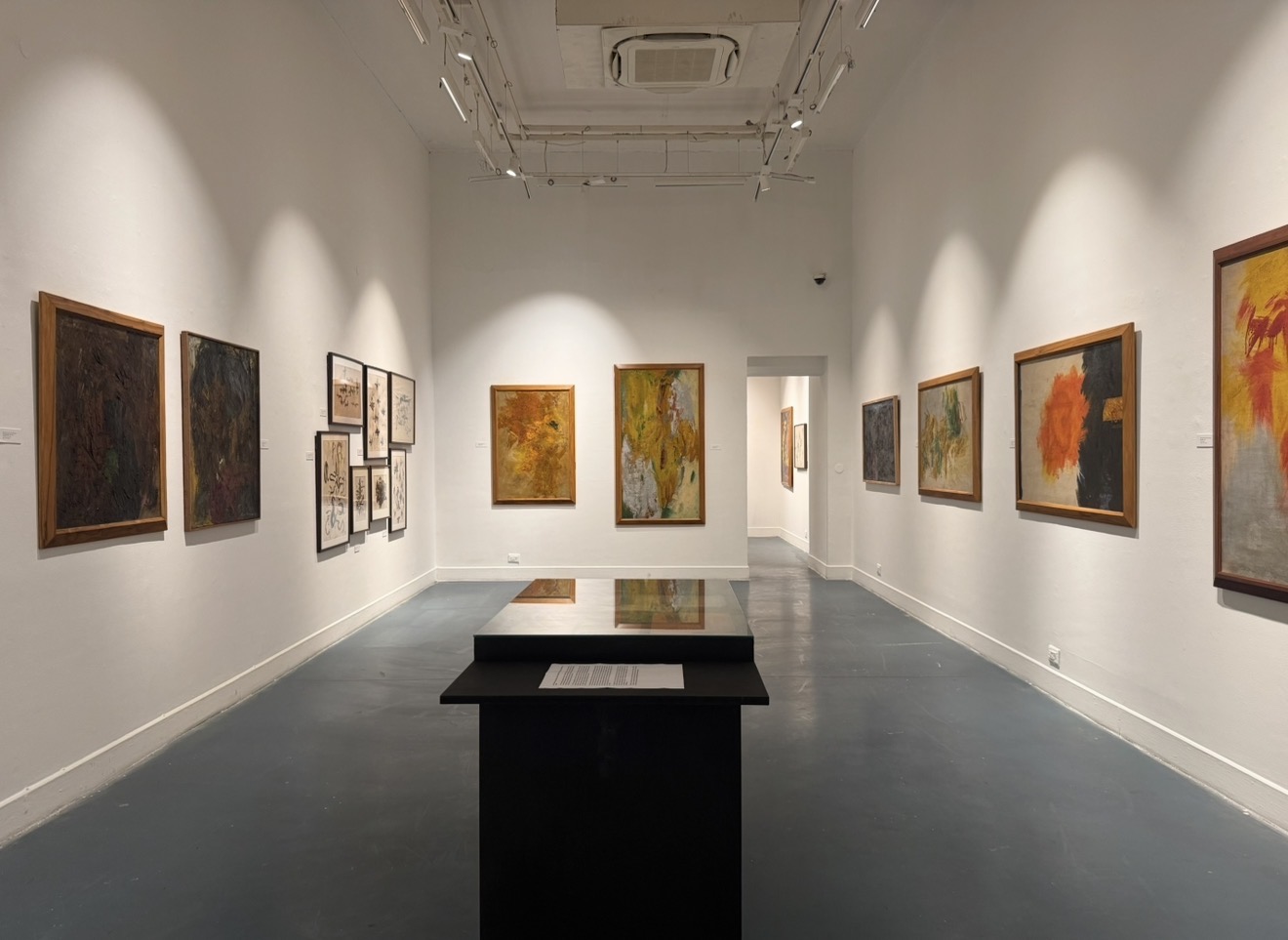
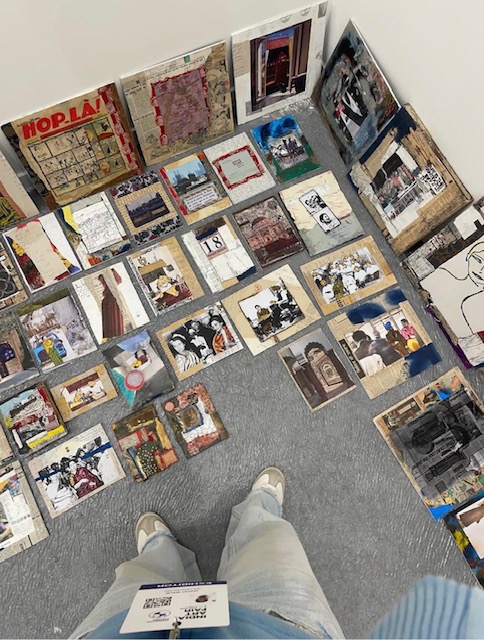
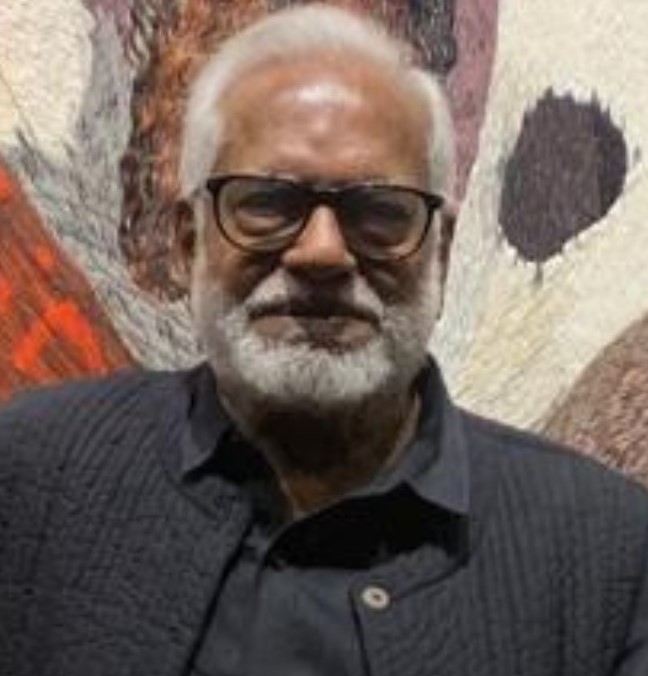
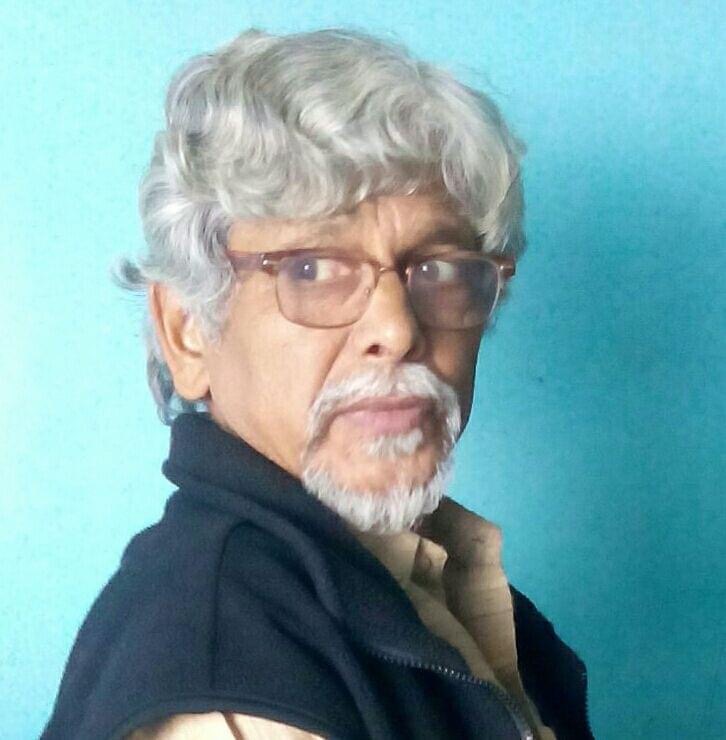
@galleriesplash, display photo from Ratan Parimoo's retrospective exhibition at Bikaner House, presented by Gallerie Splash
The Role of Material Experimentation in Indian Contemporary Practice
Art has been the most powerful mode of expression for centuries and has evolved over the years, especially in India.
The Indian art space has grown outside the confines of traditional painting and sculpture, giving space for newer artists who like to experiment with different materials and methods in their creative practise.
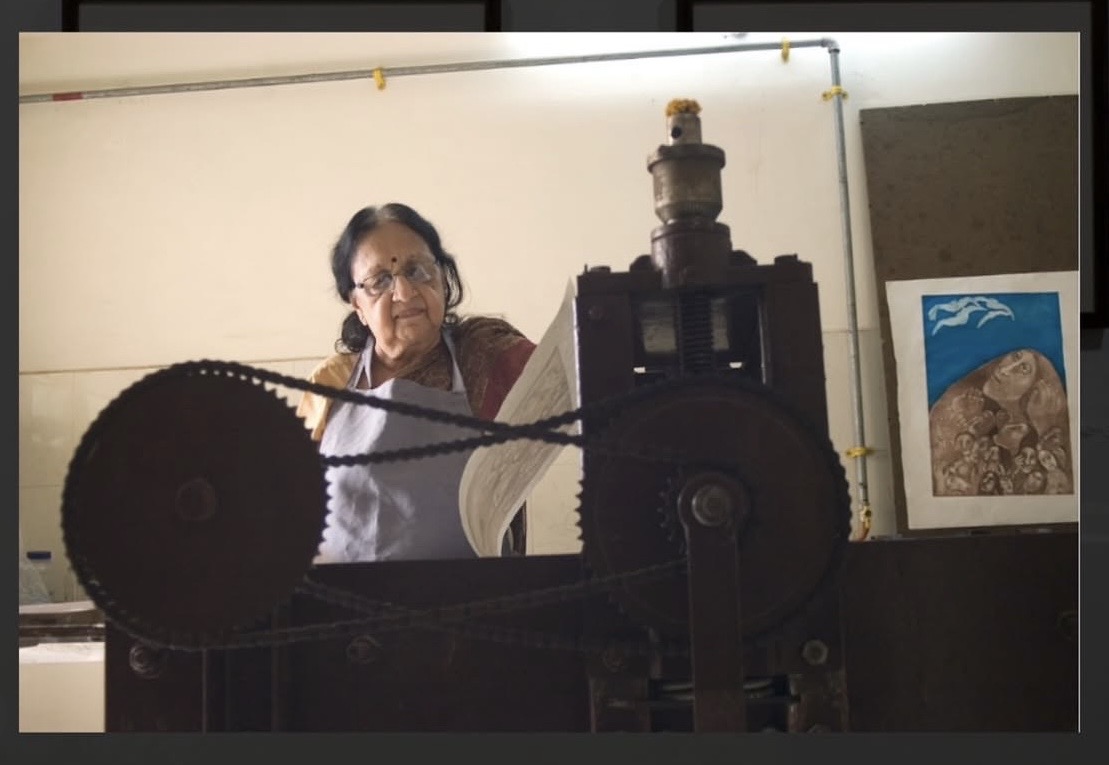
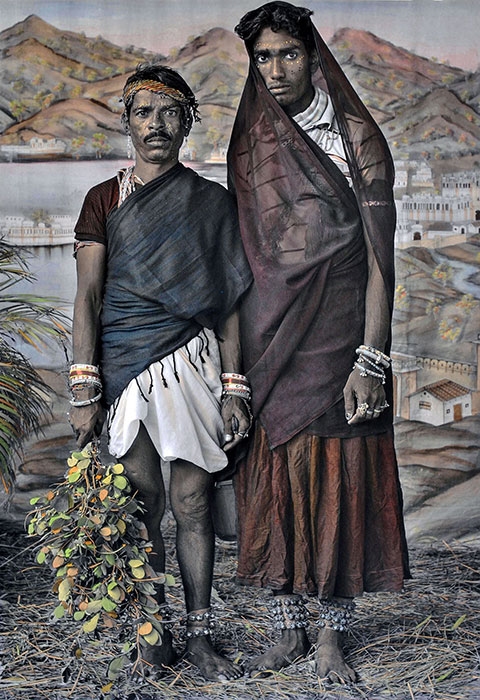
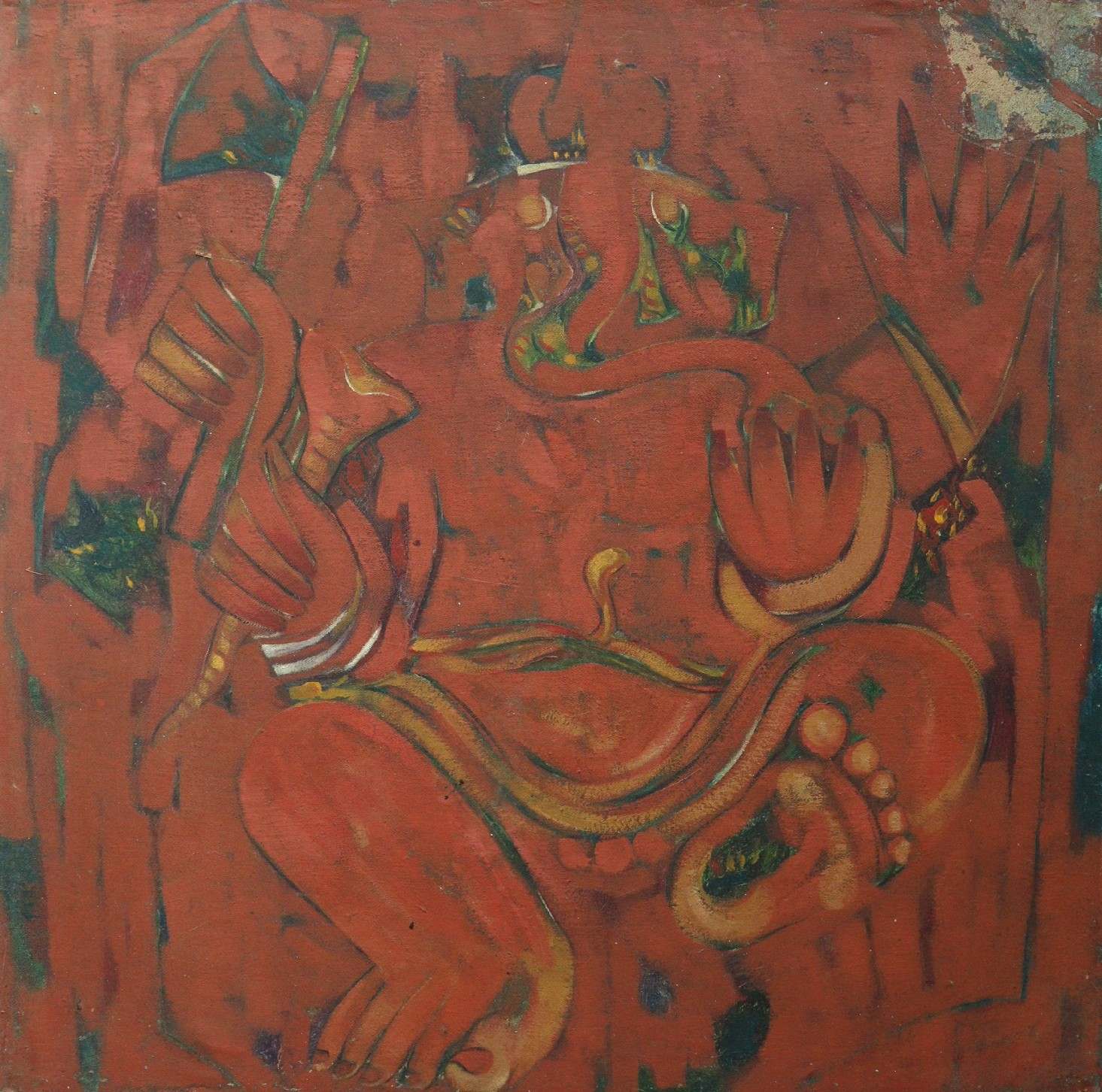
Contemporary artists in India are coming up with innovative approaches to art creation, utilizing various elements like industrial debris and recycled objects, digital media, and organic materials. Modern artists like Naina Dalal and Ratan Parimoo have challenged traditional artistic ways and methods. They have been able to expand the possibilities of painting and visual expressions through their unique approaches to form and composition.
Practitioners today often view materials as participants, giving each of them the capability to convey meaning and identity. Works of artists such as Ekta Singha showcase it beautifully, exploring the perfect blend between materials, the process, and the visual treat she creates. One such portrayal is her creation “Letters from me to me,” where she has managed to experiment with diverse materials and techniques with Nepali handmade paper beads and silk bead stitching. It creates a perfect narrative bridging memory, identity, and cultural heritage.
At the Biennale, one can experience a plethora of such art depictions that are illustrated by using various types of materials. One might feel overwhelmed to witness how well artists use materials, especially recycled ones, and are never short of expressive freedom. The choice of the material has become as important as the subject itself. With material innovations, artists in India are breaking away from the conventional norms of artistry. They are excited to navigate through the unconventional mediums by utilizing daily objects to create compelling portrayals
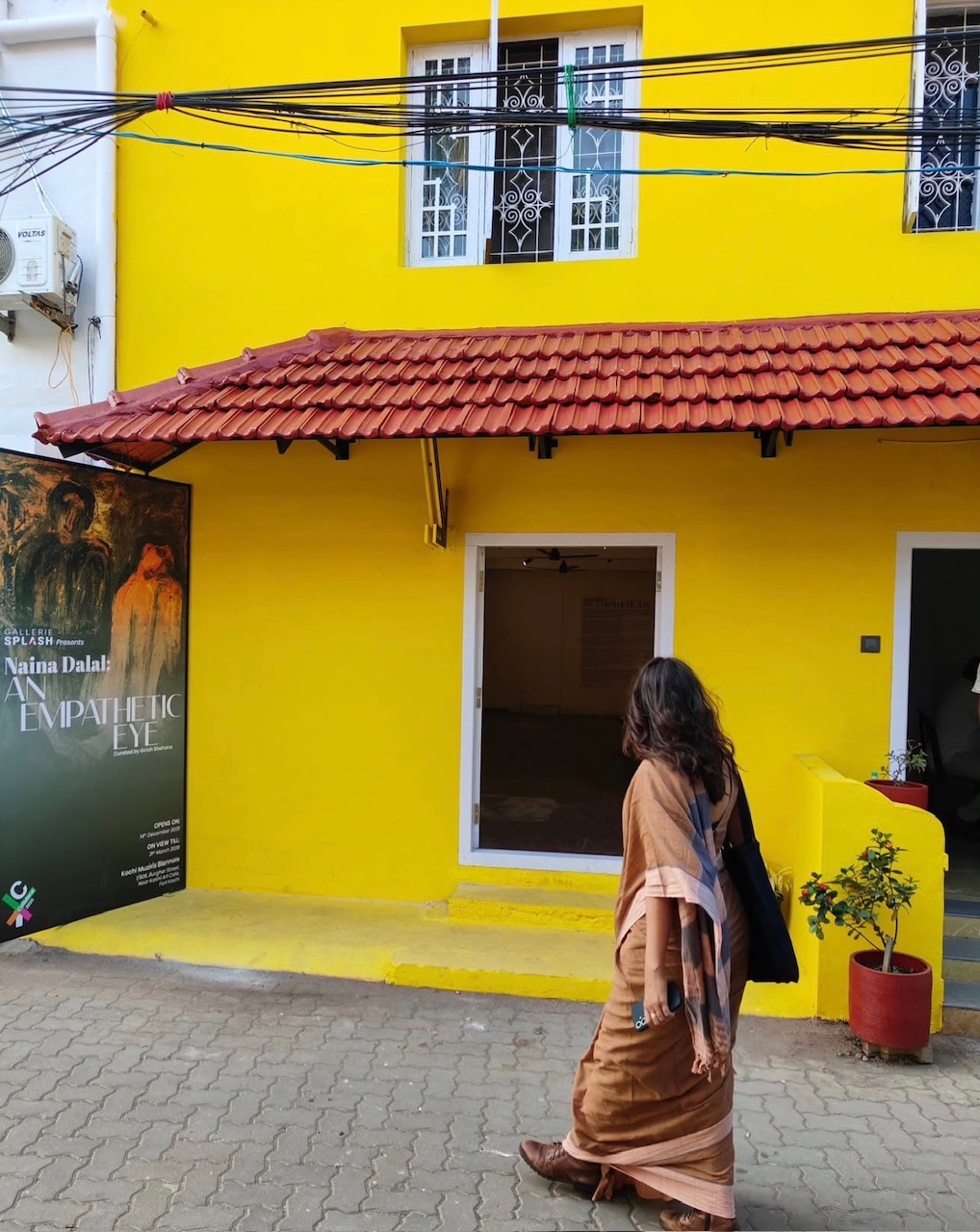
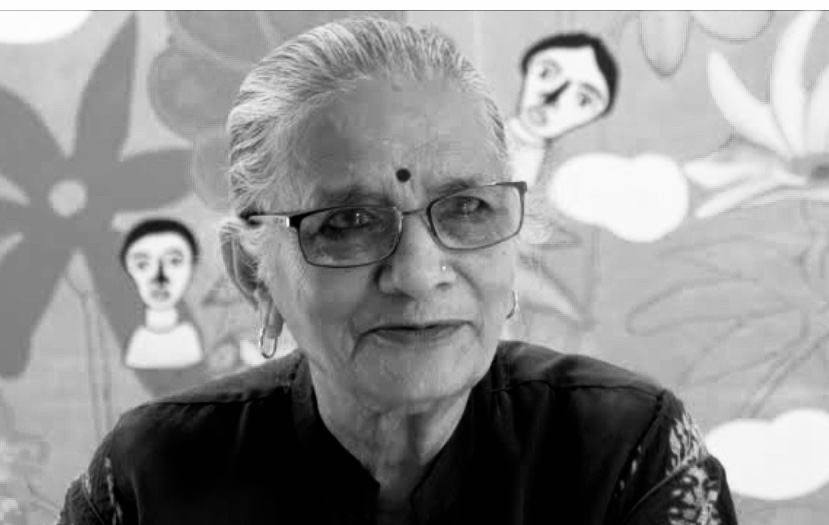
@nainadalal, Naina Dalal at her studio in Baroda
This current scenario echoes India’s evolving socio-cultural and political realities and has given birth to many new, budding intelligent artists who are abundant in creativity and practicality.
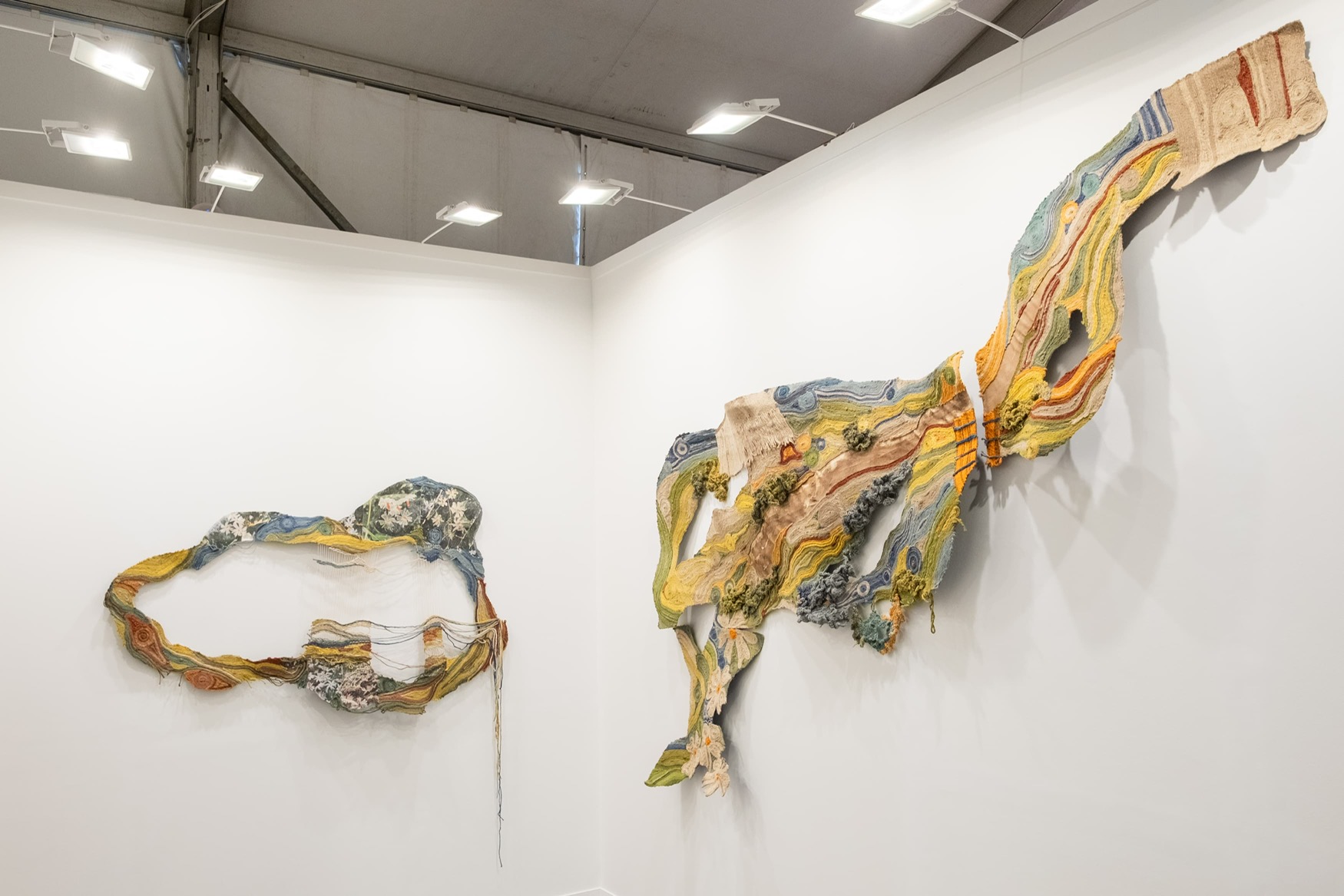
@galleriesplash
Another popular name is Geetanjali Bayan, who, with experimentation with textures, forms, and experimental techniques, using thread and ropes, demonstrates how material choices can be connected deeply to culture, environment, and experiences. Hence, through experimentation with textures, forms, and medium, contemporary artists can develop unique visual languages that reflect the complexities of contemporary life in India.
One of the major drivers of material experimentation is sustainability, as there is a growing concern about environmental degradation. Scarcity of resources and the increasing resource consumption have pushed creators to find alternatives to conventional materials.
Artists are now incorporating many recycled metals, construction waste, reclaimed wood, and biodegradable materials that can be locally sourced.
It is a great effort by artists to showcase not only art but also to convey a strong message of the need to conserve for a sustainable future by reducing environmental impacts.
Well, that's not all to it.
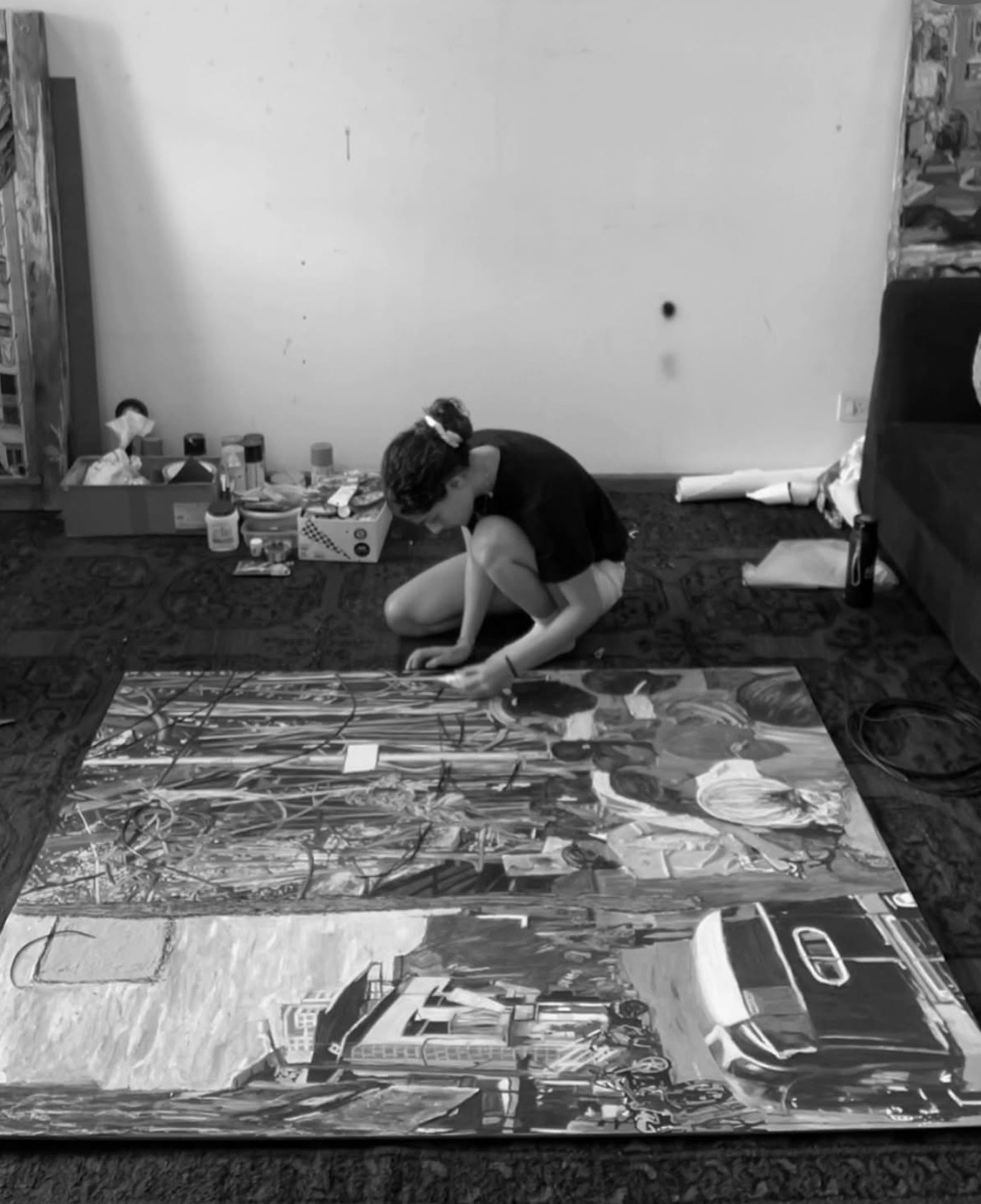
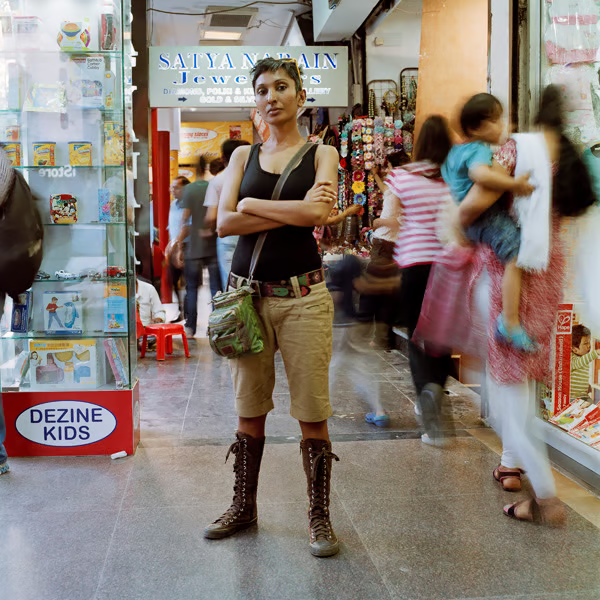
@inayatmalik
Experimentation with materials also gives artists the freedom to expand the creative possibilities. It gives the space to test newer combinations, fabrics, techniques, and textures. It explores all possible methods to challenge the conventional outcomes, thereby giving birth to unique creative experiences. Materials are often used to carry conceptual significance, helping to address themes such as identity, memory, urbanization, migration, and consumer culture. But artists today are combining this approach, retaining the traditional artistic methods.
Behind the scenes, IAF display 2026, Gallerie Splash
Inayat Malik, a multidisciplinary artist based in New Delhi, is a perfect example of combining traditional craftsmanship with modern approaches. Though the choice of material becomes an integral part of the narrative rather than simply a medium of expression, the importance of tradition is not lost but rather exemplified. With such experimentation, artists preserve cultural knowledge and traditional practices within contemporary discourse.
Conclusion
Indian art is evolving and is deeply intertwined with the expansive exploration of newer materials that can be used for creative portrayals. Modern experiments of artists such as Naina Dalal and Ratan Parimoo, to the innovative practices of Ekta Singha, Geethanjali Bayon, and Inayat Malik, have pushed the extent of how well materials can be used to shape meaning and experience. In this ever-evolving cultural landscape of Indian contemporary art, material experimentation is an important force that will help in fostering creativity, preserving heritage, and opening new pathways for expression.


Leave a Comment