Indian modern art doesn't come from one place. It never did. As is attributed to Jawaharlal Nehru, the phrase "India, Unity in Diversity", that is aptly seen in Indian Modern Art. One might picture Indian art to be one big, unified movement. But it was never that way and will never be so.
Art in India is so diverse in nature, with Bengal doing its own thing, Bombay doing something entirely different, and states like Madras, Baroda, and Delhi all pulling in their own different directions. Truly, modern art in India has always been regional expressions. This regional pull has given Indian modern art its truly unique texture.
Bengal Started the Conversation
It was the start of an era that was kicked off by the Bengal School, setting the ground to react strongly against the colonial academic realism.
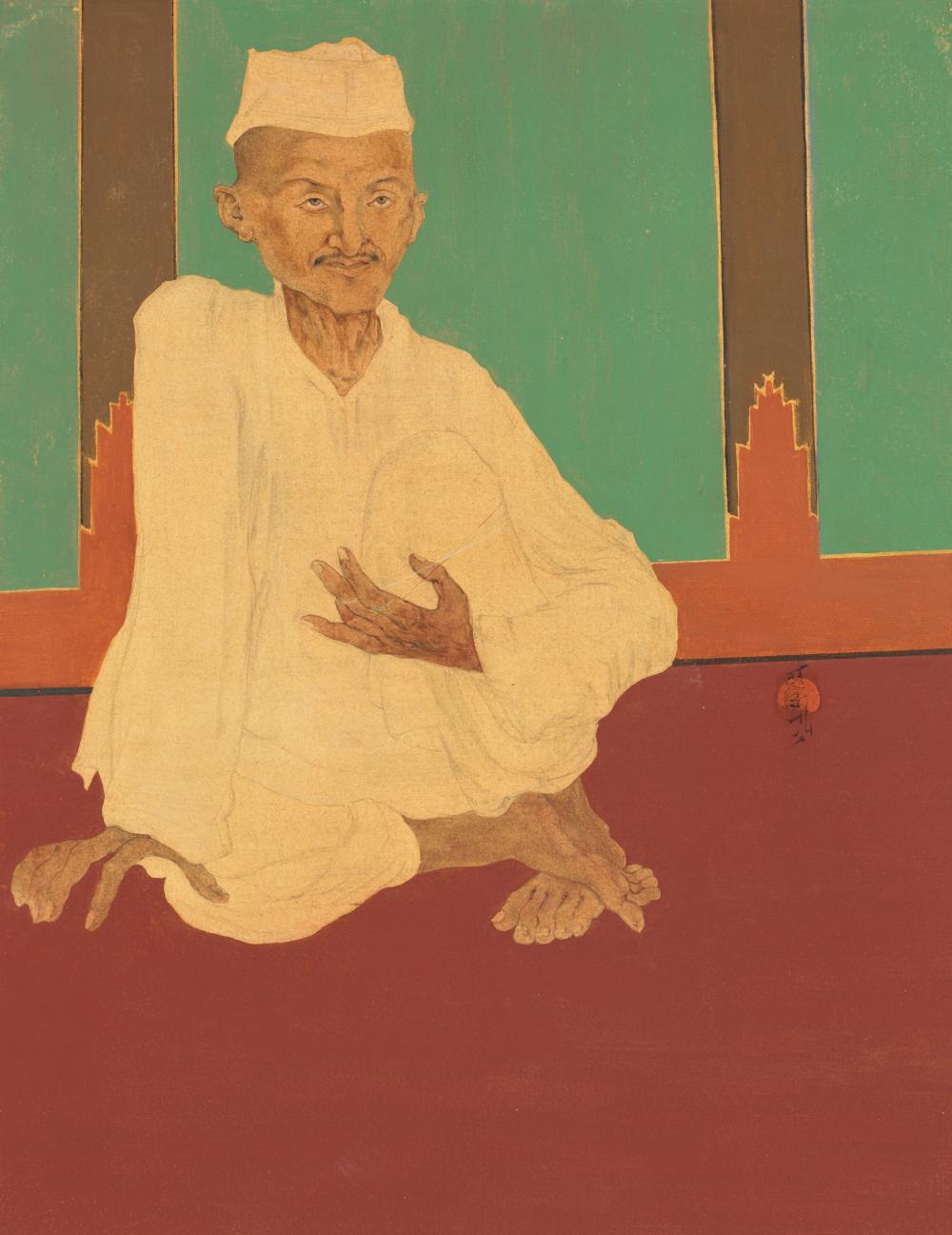
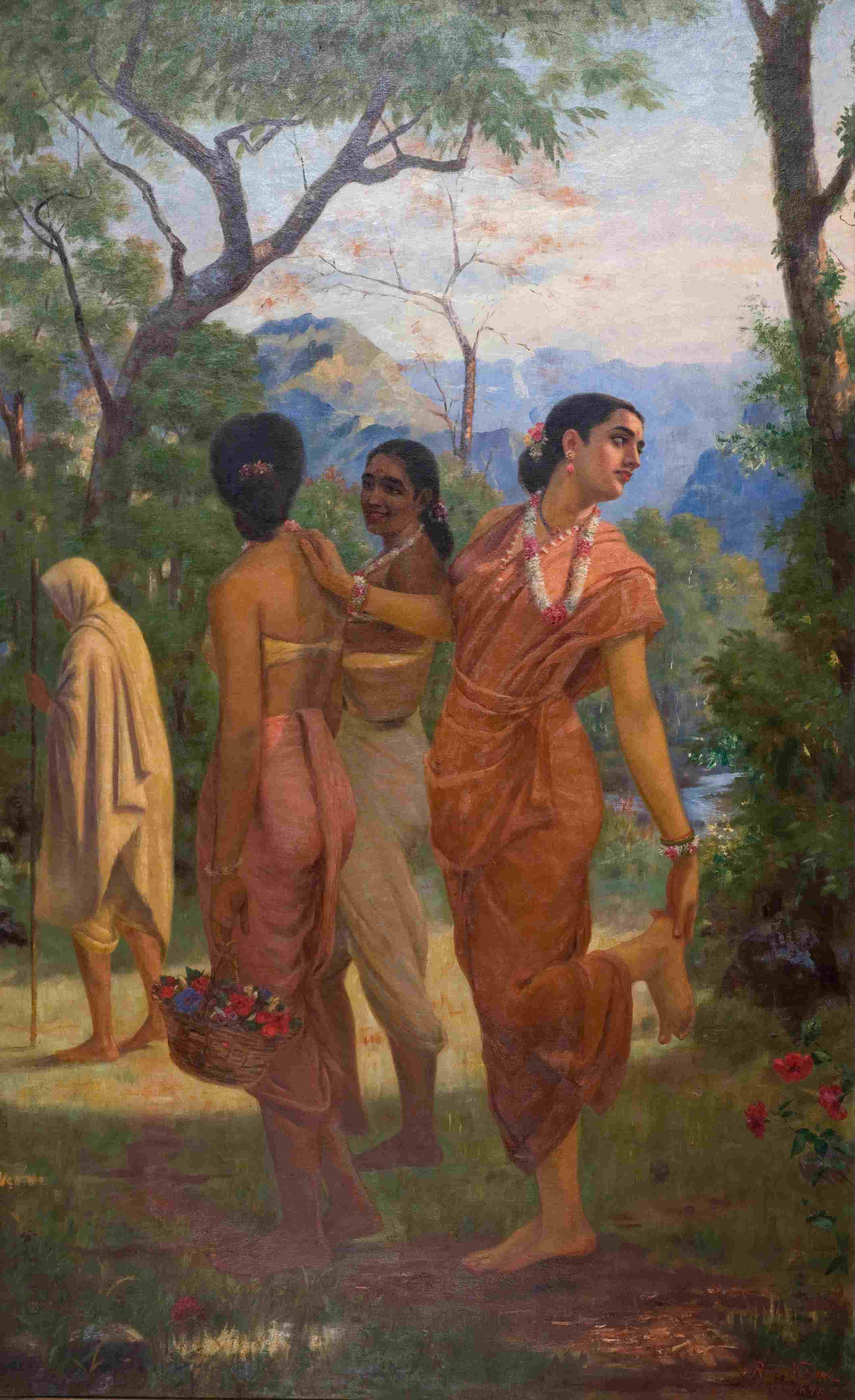
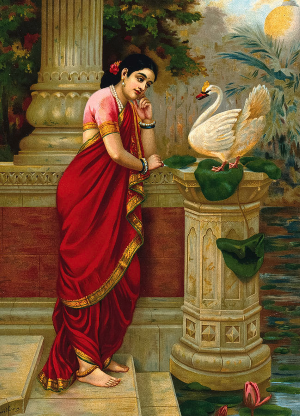
Abanindranath Tagore, who was the first advocate of the Swadeshi values in Indian art, along with his circle, leaned into the Mughal and Rajput miniature traditions that incorporated softer lines, muted colours, and spiritual themes. A deliberate move to strongly convey the point that we didn't need the European rules to legitimate our art.
@christies, @owner of the painting
That circle included his own family. Rabindranath Tagore, better known as a poet, came to painting later in life with moody, instinctive forms that pushed the Bengal sensibility toward something more personal and abstract. Gaganendranath Tagore, Abanindranath's brother, took the school in a different direction altogether, folding in cubist geometry and sharp urban satire while still working within that same Bengal foundation.
This was the much-needed regional starting point that eventually shaped how an entire generation thought about what Indian art should look like.
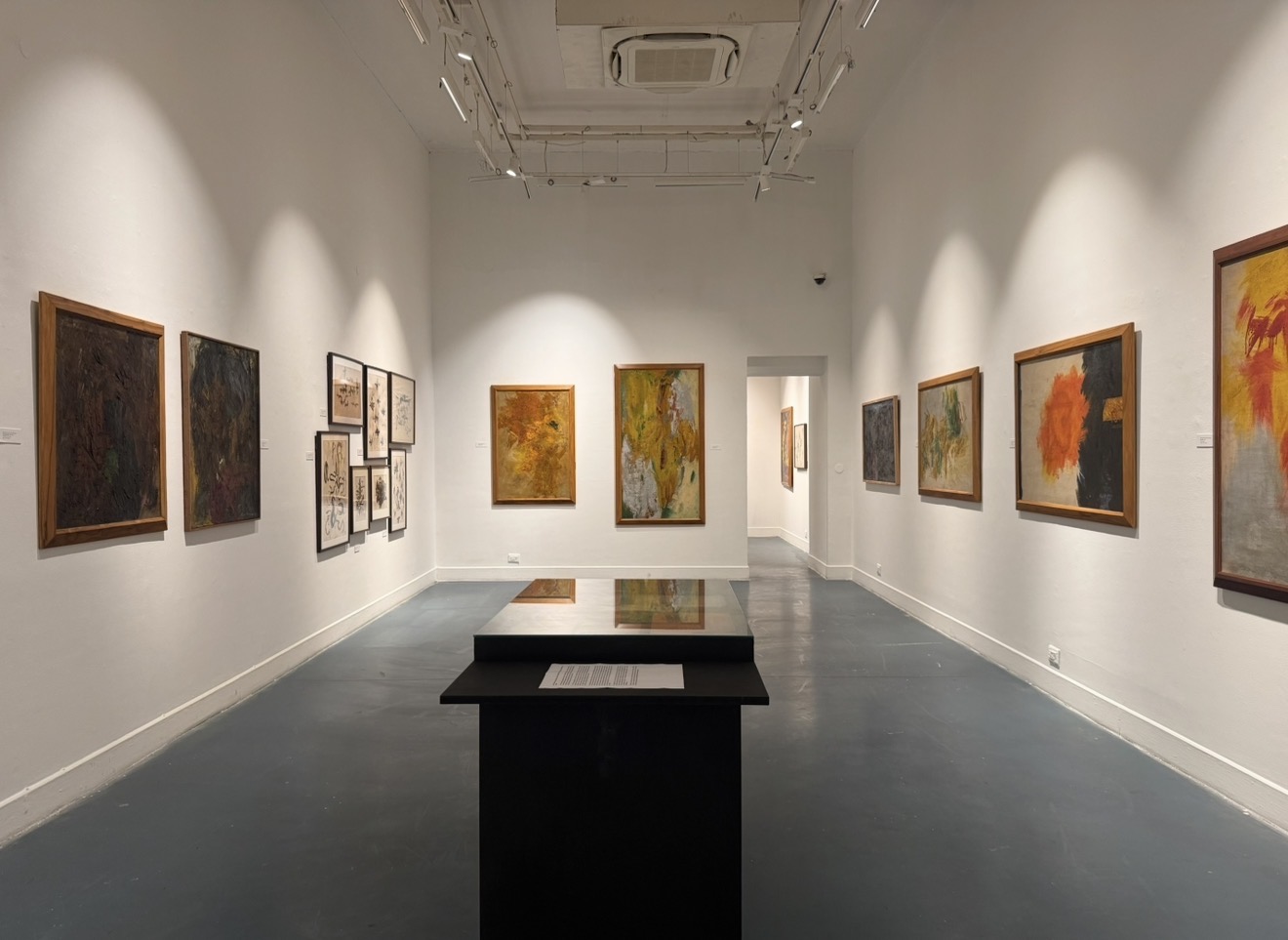
@galleriesplash
Bombay Wanted Something Faster, Bolder
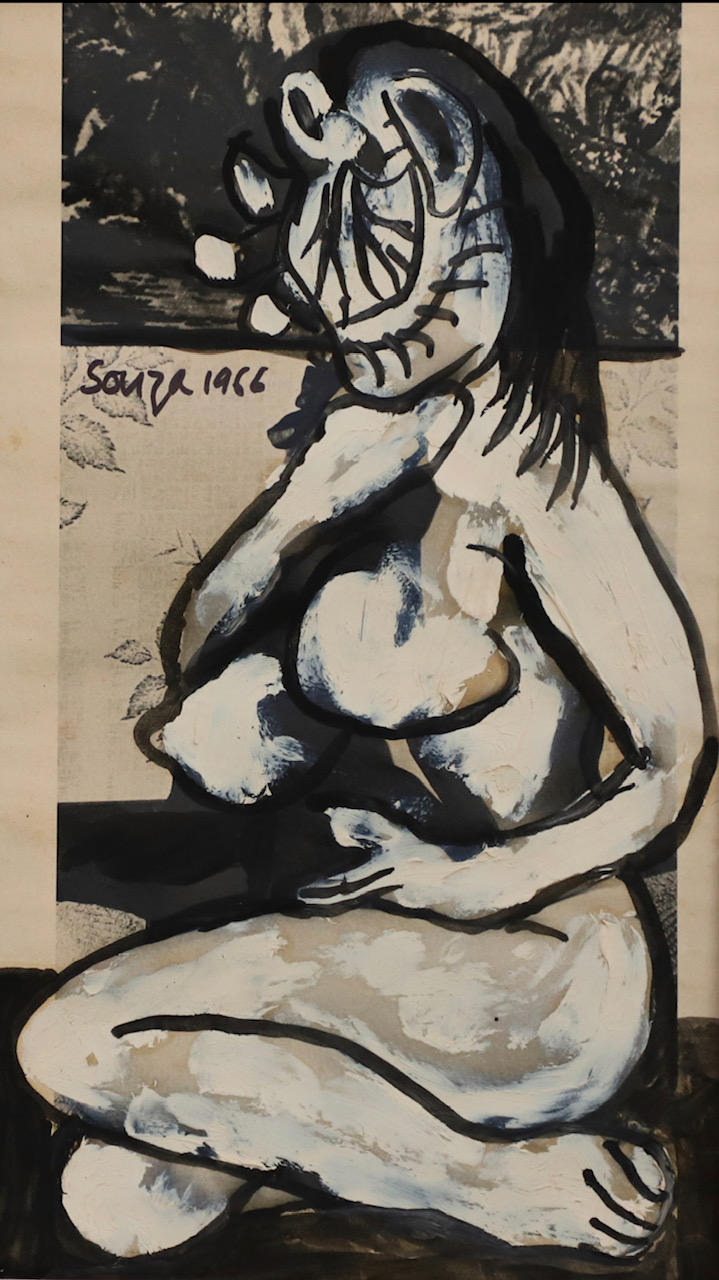
When things were so in Bengal, the mood was different amongst Bombay's Progressive Artists Group. They had a completely different energy. Artists like Husain, Raza, Gaitonde and Souza were interested in reviving traditions quietly but to break out from it loudly.
Bombay's cosmopolitan and commercial pulse has reflected in their work with bolder colours, an aggressive form, and more of a confrontation with modernization, consciously not leaning into nostalgia.
Compared to Bengal, where they were more invested in looking inward and backward, Bombay wanted to look outward and forward.
It was the same country, same decade, yet had a completely different visual agenda and instincts.
Madras Brought Its Own Discipline
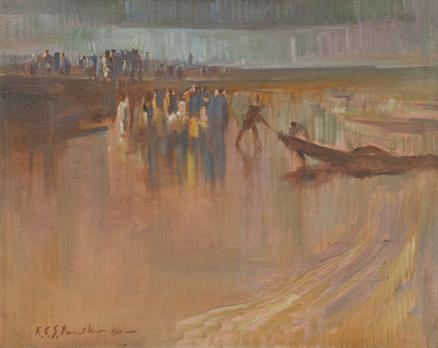
Madras was always rich in scriptures, symbols, and local craftsmanship that leaned more into traditions. The Madras Art Movement, which was primarily centred around K.C.S. Paniker and the Cholamandal artists, took a distinct path.
@saffronart auctions
The modern visual language was mostly influenced by Tamil letterforms, temple motifs, and folk techniques. There was a natural leaning towards rooting modern art in something more regional and tactile.
It was this inheritance of art that created a grounding culture for the Madras artists, thereby giving them a unique visual identity. They never needed to copy Bengal or Bombay at all.
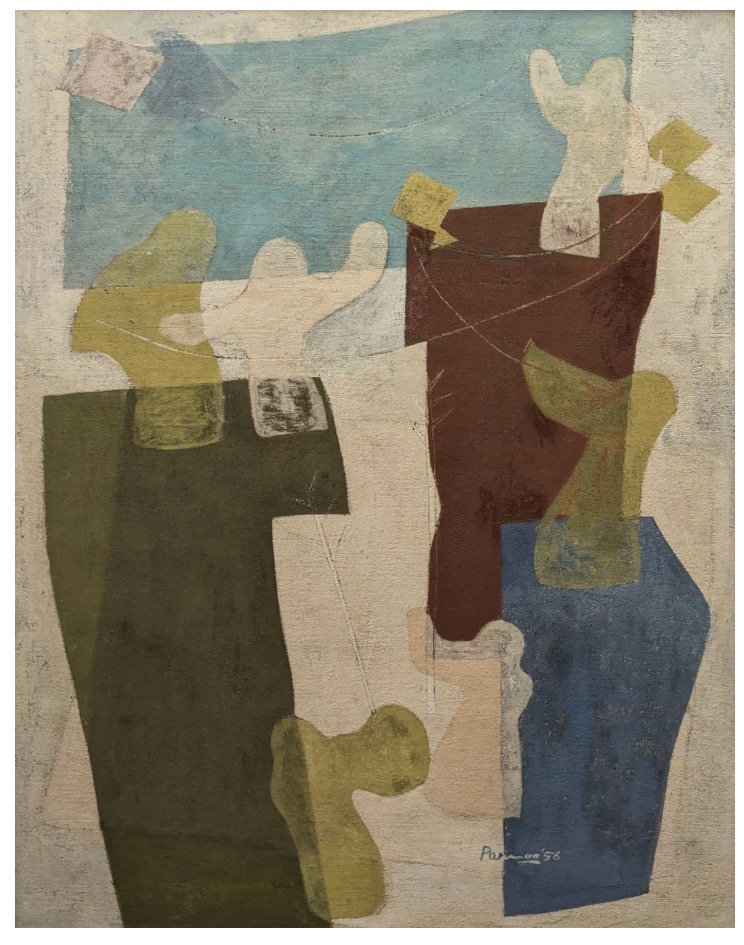
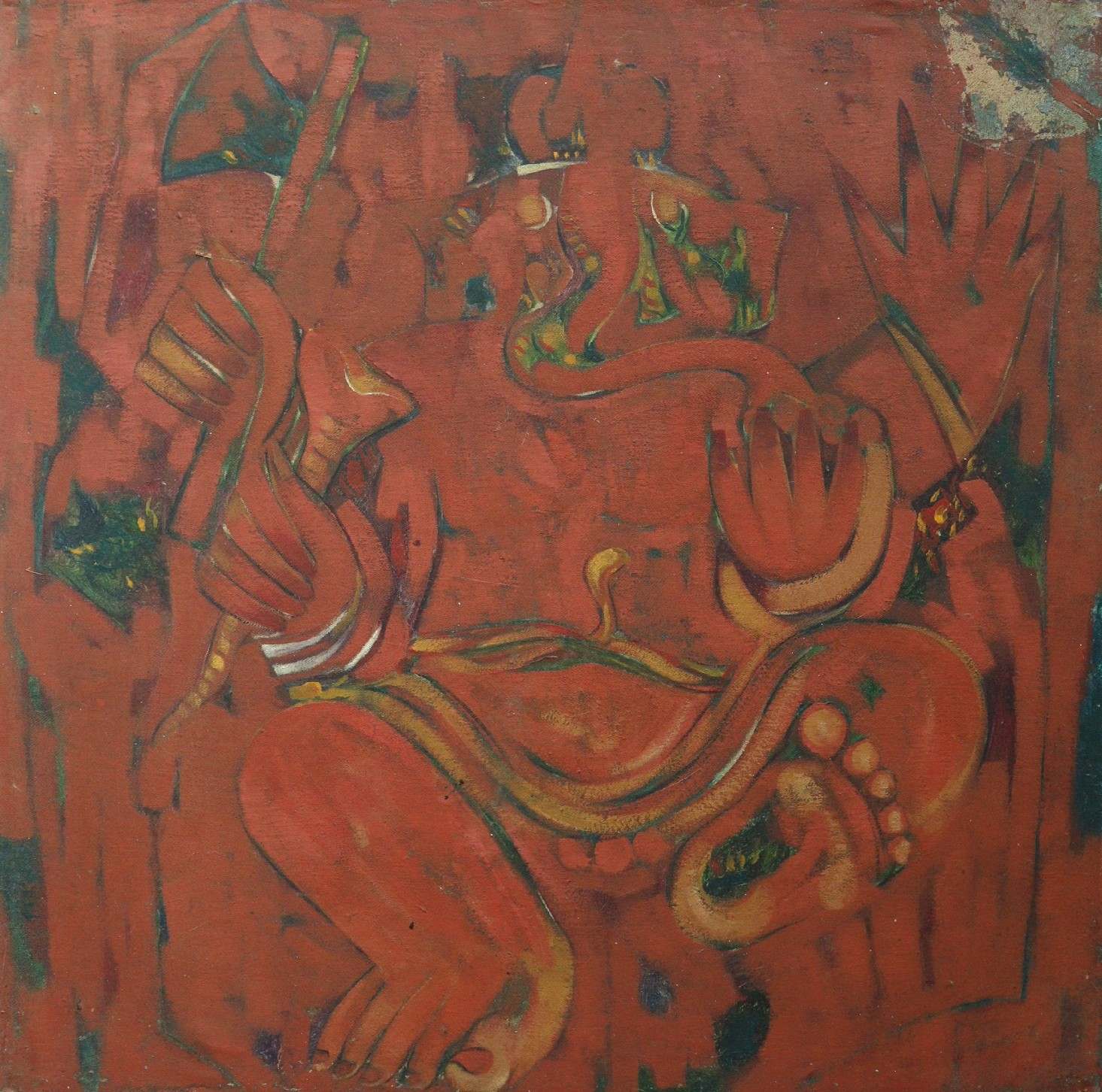
Painting by Ratan Parimoo, @galleriesplash
Baroda Turned Into a Melting Pot
Things were different in Baroda as the regional lines had started to blur a little when Baroda's Faculty of Fine Arts grew in prominence. Artists across the country had started to study together. These artists from different states brought regional instincts into one space.
Hence, Baroda became less regional and rather more about how different regions started talking to each other. This is very evident from the works of Gulammohammed Sheikh, Bhupen Khakhar, and Nilima Sheikh.
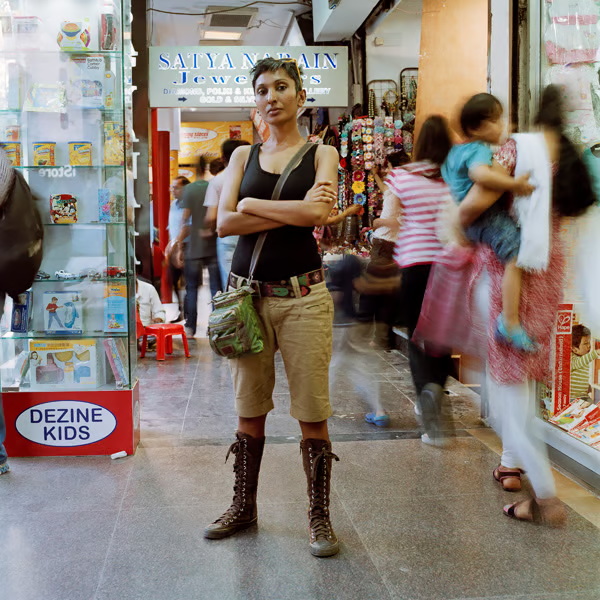
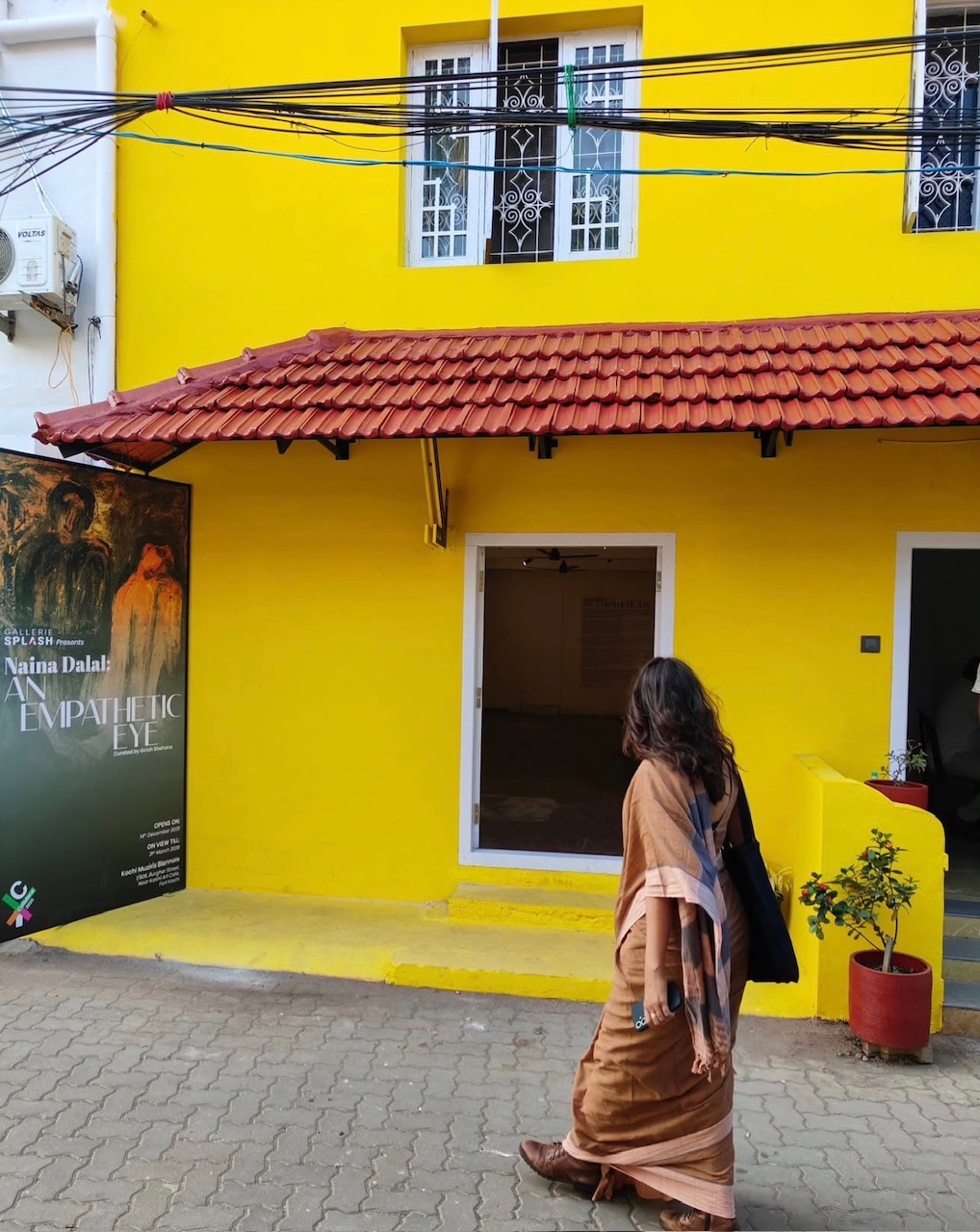
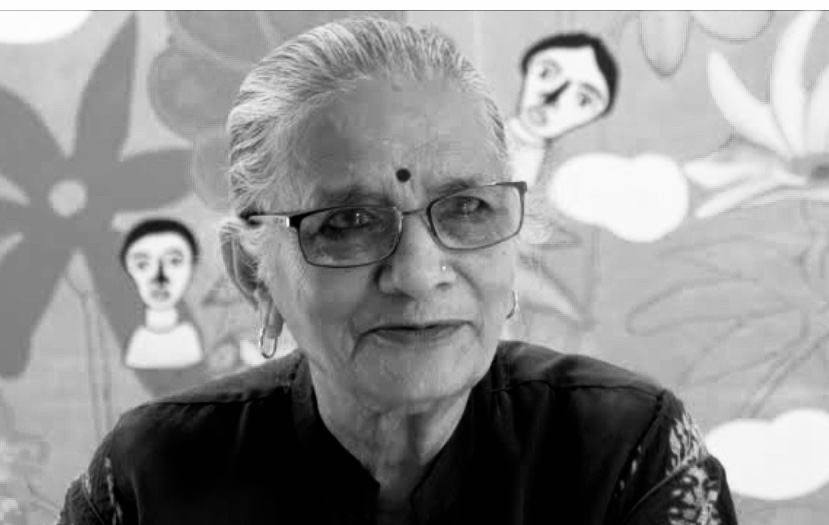
Ratan Parimoo was one of the pioneers of abstraction to come out of this Baroda environment, shaping the space as much through his own painting as through the decades he spent teaching art history there. Naina Dalal, born in Vadodara in 1935, stayed rooted in Baroda through her own education at the Faculty of Fine Arts, and carried that grounding into a practice built around interiority and the emotional lives of women, even as her printmaking took her as far as London and New York.
All their works do carry traces of multiple traditions of each region, all stitched together rather than separate expressions.
Karnataka Carried Its Own Thread Forward
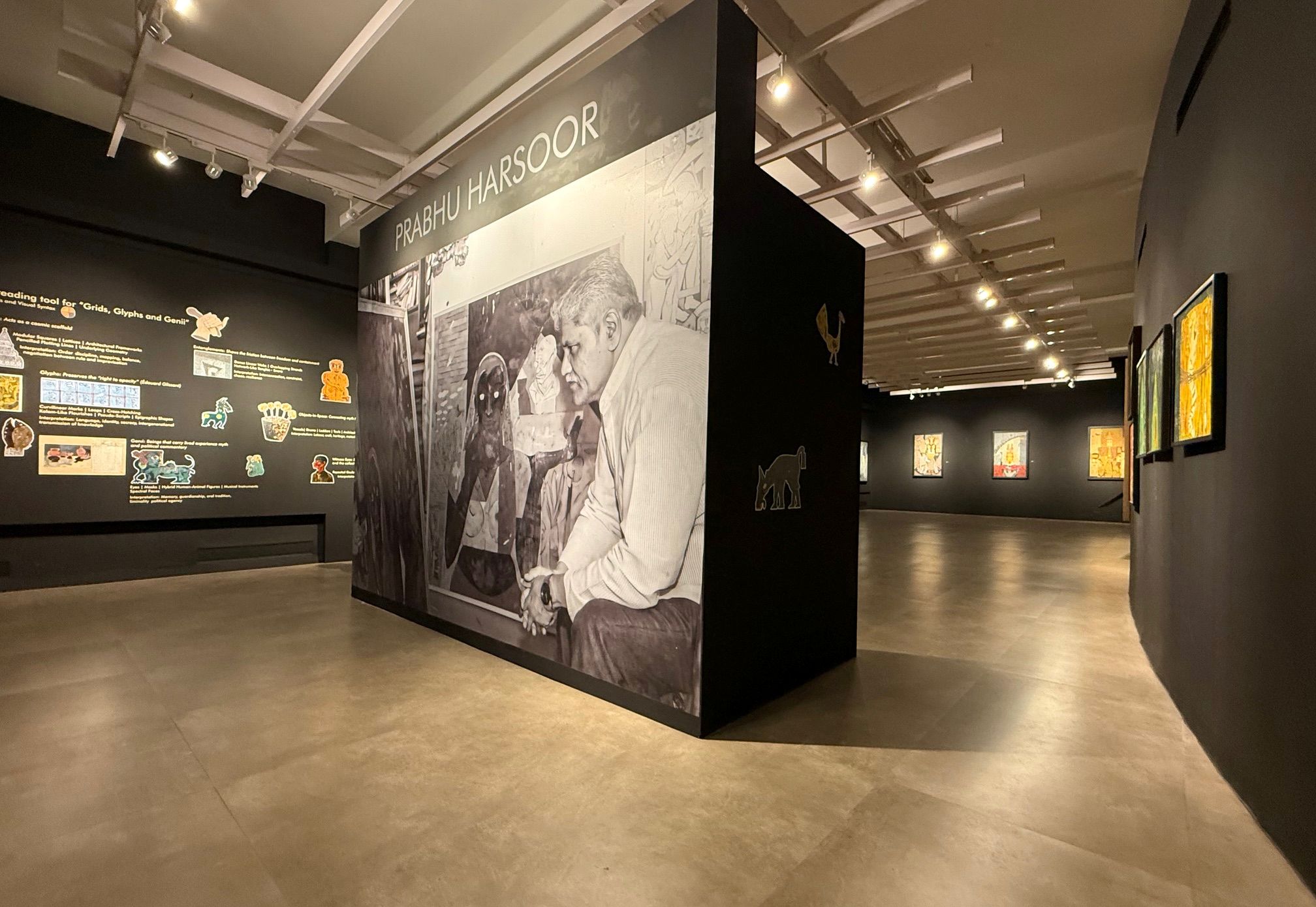
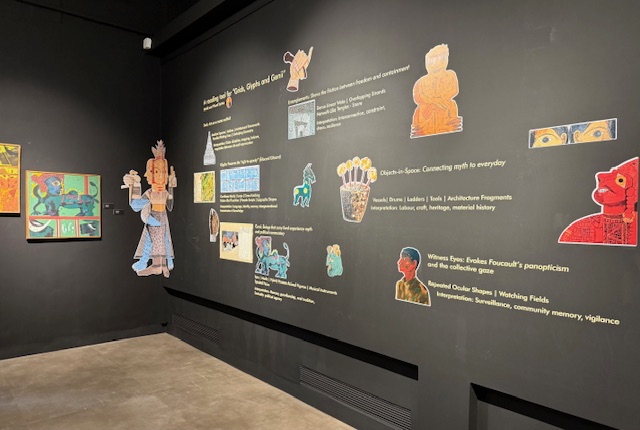
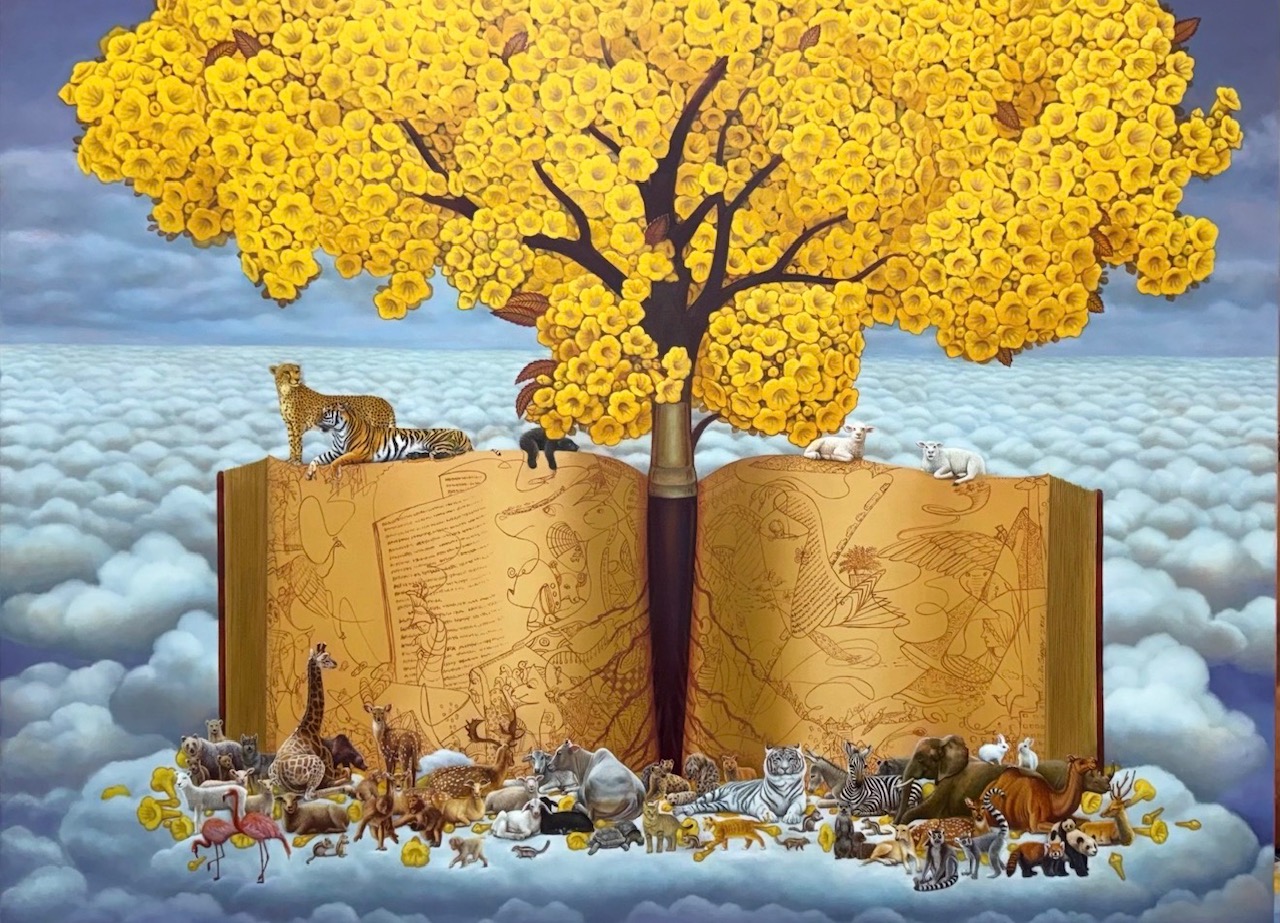
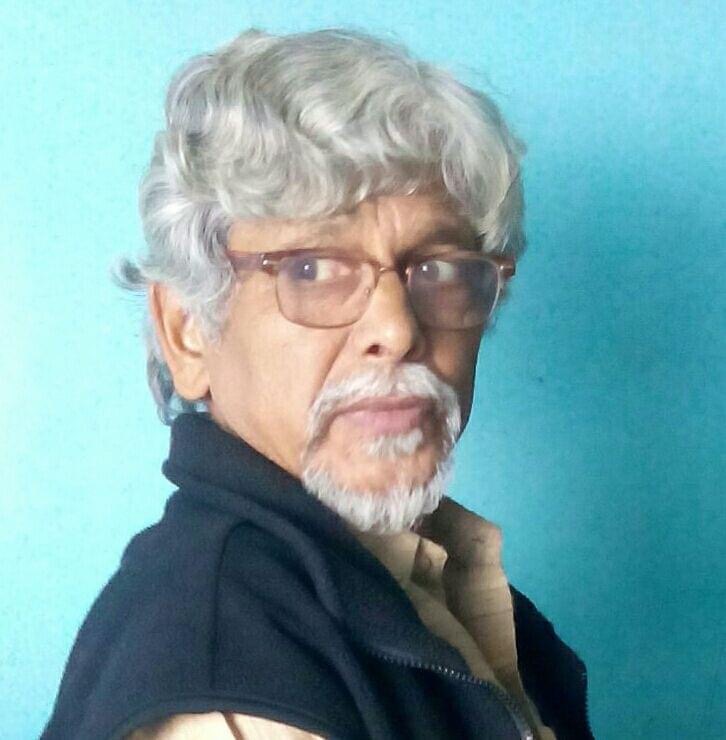
Karnataka's contribution to this regional map doesn't get talked about as often, but it's there, and artists like Prabhu Harsoor make that clear. Harsoor works in the space between the abstract and the figurative, building a visual language that's distinctly his own, shaped heavily by memory and by the cultural imagery of communities across Karnataka, both past and present.
@galleriesplash, display of Prabhu Harsoor solo at Triveni Kalasangam Delhi
His work doesn't stop at abstraction for its own sake either. He extends that same visual language toward political narration, honouring the leaders and thinkers who shaped Karnataka's voice against fundamentalism. Trained in Gulbarga and Hampi, and now teaching at Tumkur, Harsoor's practice stays rooted in Karnataka even as it's been shown at national and international platforms through the Lalit Kala Akademi. His work is a reminder that the regional map of Indian modern art keeps extending well past the four points usually mentioned.
The process of learning art often involves understanding its evolution by flattening it into one neat timeline. By doing so, it becomes easier to summarise and understand each one.
It might seem like the perfect way to do it, but flattening does lose something very important. Indian modern art was never about evolution from one to the other. It was more of a progressive transformation without losing its traditional essence.
And that happened in every state. The spiritual restraint of Bengal, the urban aggression in Bombay, the tight rootedness in craft that Madras always has, and the blending of different artists in Baroda.
Indian art came from different cities and art schools, influenced by specific local histories. And while keeping it that way, they were a part of the national and global change that happened at the same time. If one has to truly understand the Indian modern art form of today, then one needs to first delve into the regional texture of art.
It's not one voice, but many that have kept overlapping from time to time and many times colliding, thereby challenging artists to bring out their unique creations. That's today's Indian Modern Art.
The Map Is Still Being Drawn
One may see Indian modern art as changing and adapting to the present societal existence and influences. But contemporary Indian artists still carry these regional threads. One can still see strokes and colour choices, even compositional habits that can be identified to where an artist was trained.
It can't be seen as a limitation. It is what keeps Indian modern art as one single unit expressing the country's unity with the richness of diversity. It's the regions that have built the movement, but the movement will never stop being regional.


Leave a Comment